Do your cheeks flush easily, stay red, or sting with most products? You may have rosacea, a common long-term skin condition that is often mistaken for acne, allergy or simple sensitivity. With the right care, it can be controlled very well.
What is rosacea?
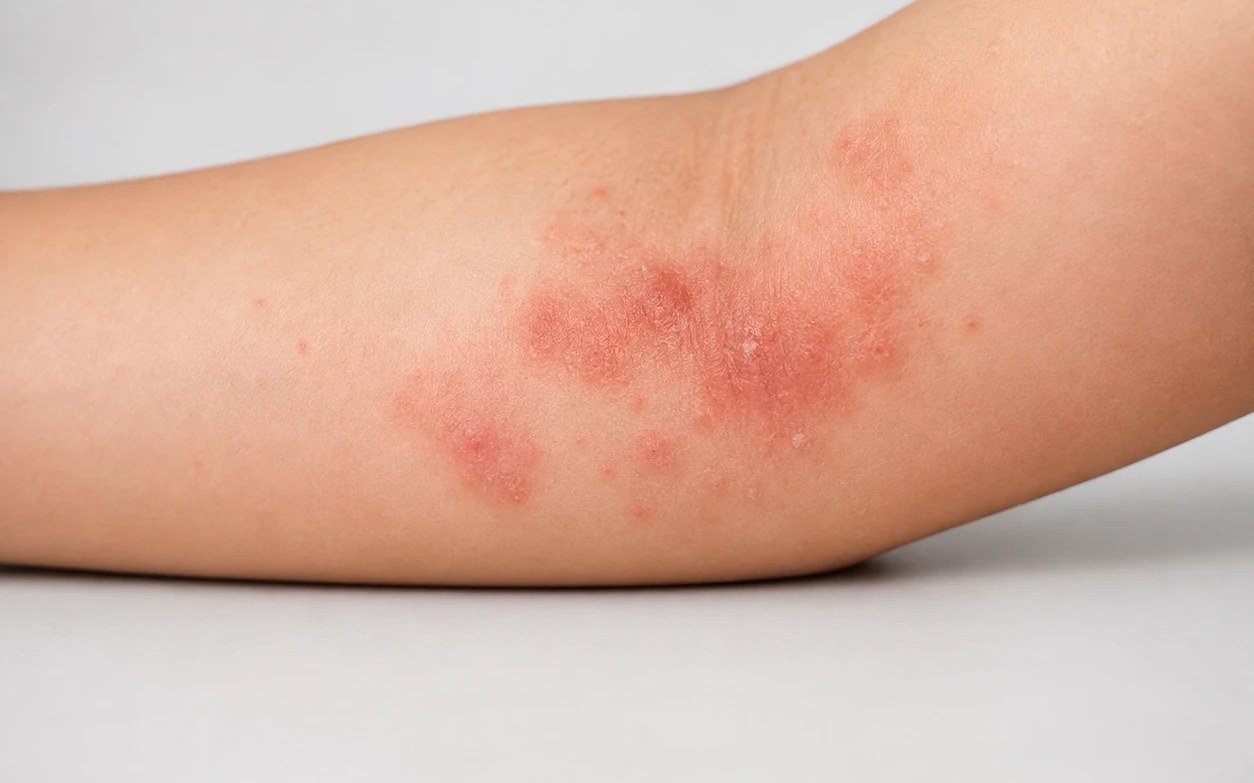
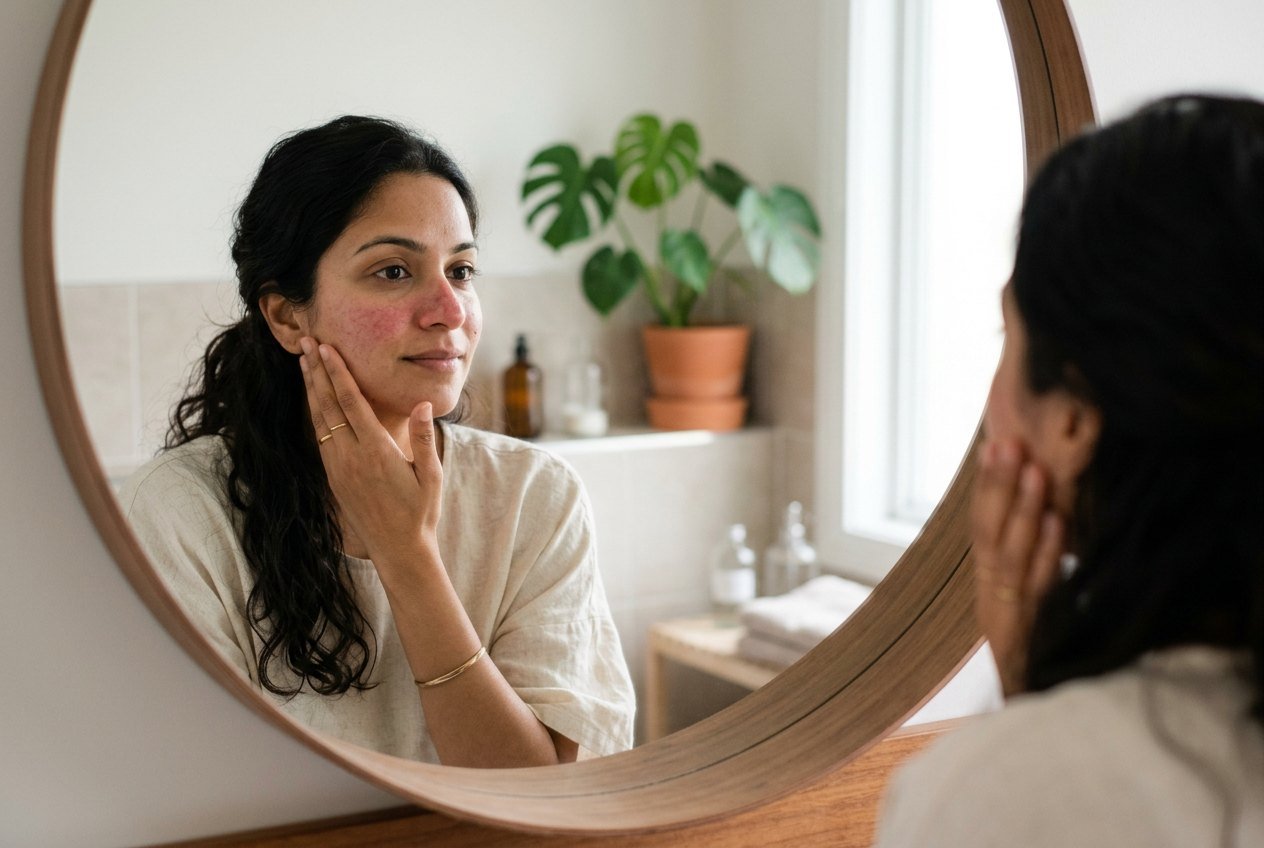
Rosacea is a chronic inflammatory condition of the face. It usually affects the cheeks, nose, chin and forehead, and tends to come and go in flares. It is more common in adults between 30 and 50, and on Indian skin the redness can look darker or brownish and is easy to miss.
Common signs
- Frequent flushing or blushing
- Persistent redness on the central face
- Visible small blood vessels
- Pimple-like bumps without blackheads
- Burning, stinging or dry, sensitive skin
- Sometimes gritty, irritated eyes
Common triggers
- Sun exposure and heat, including hot kitchens and Ahmedabad summers
- Spicy food, hot drinks and alcohol
- Stress and strong emotions
- Harsh scrubs, toners and too many active products
- Unprescribed steroid creams, which can cause a stubborn rosacea-like rash
Rosacea is not the same as acne
- Rosacea bumps appear without blackheads or whiteheads.
- Strong acne products like benzoyl peroxide and scrubs often irritate rosacea.
- A dermatologist can tell the difference and choose the right treatment.
A rosacea-friendly skincare routine
- A gentle, fragrance-free, non-foaming cleanser with lukewarm water
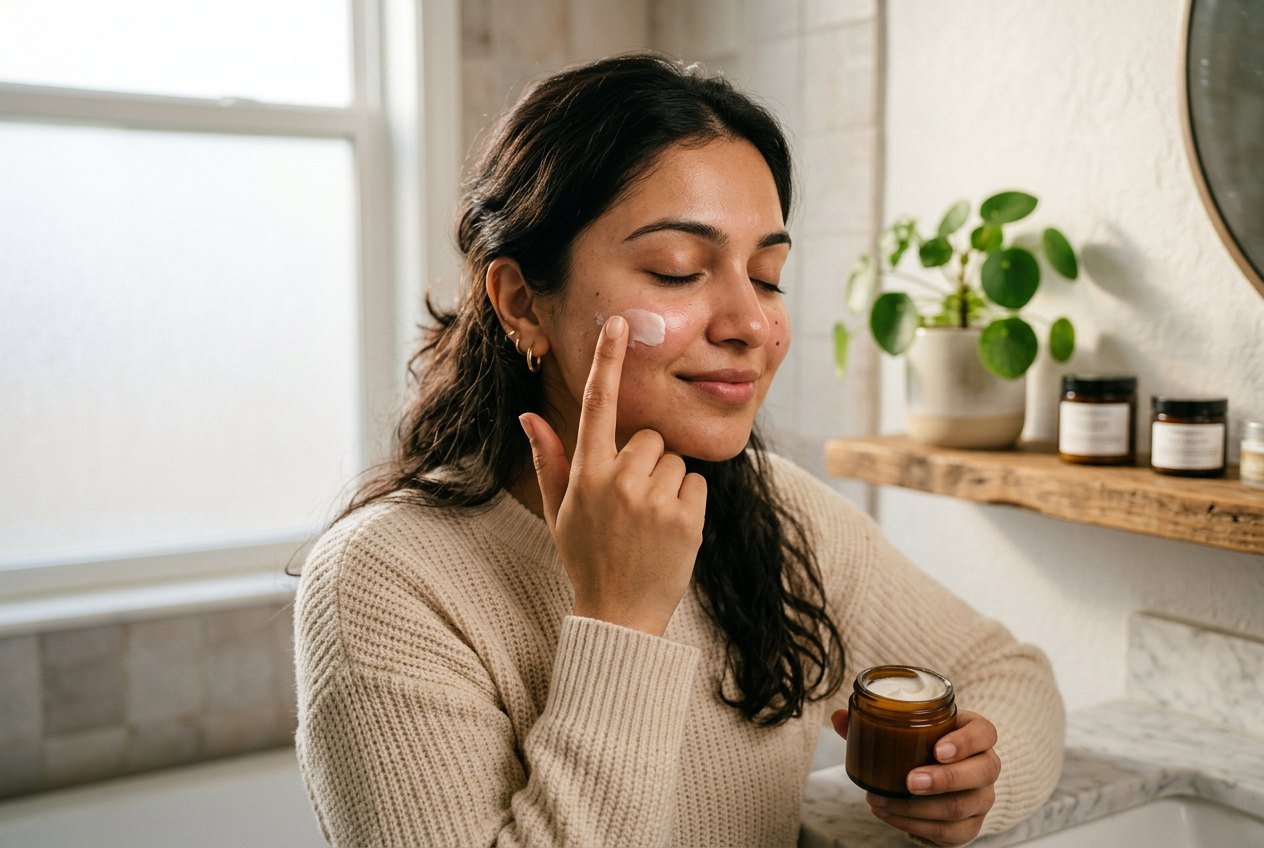
- A soothing moisturiser with ceramides or niacinamide
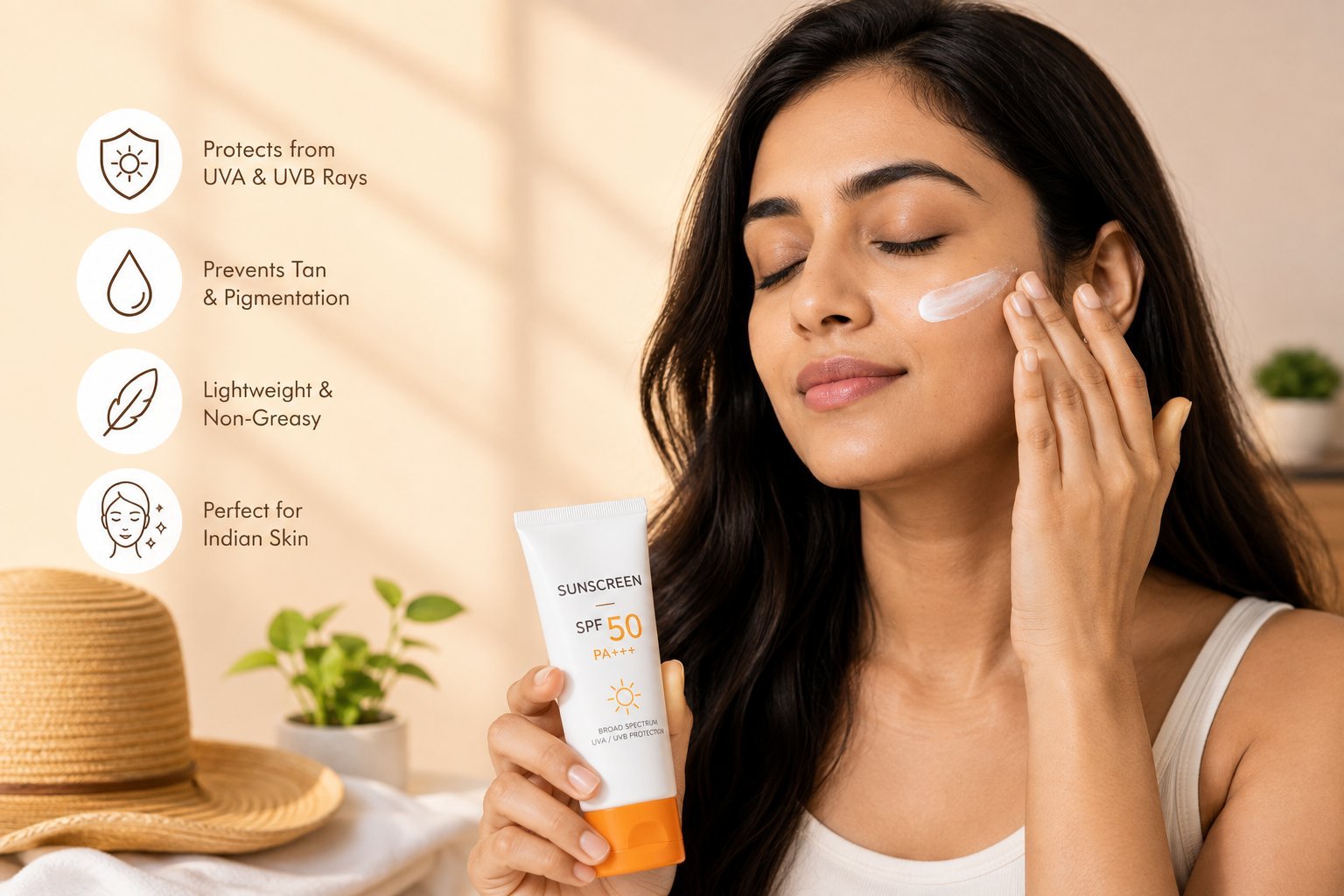
- Daily mineral sunscreen, the most important step. See our sunscreen guide.
Introduce new products one at a time, and patch test first.
How dermatologists treat rosacea
Prescription creams
Topical treatments calm inflammation and bumps and reduce redness over a few weeks.
Oral medicines
For moderate rosacea, short courses of oral medication may be used under supervision.
Laser and light treatments
Selected lasers can reduce visible blood vessels and persistent redness once inflammation is controlled.
Barrier repair
Healing the skin barrier makes skin less reactive and flares less frequent. Read more on caring for sensitive, oily skin and winter skincare.
When to see a dermatologist
See a doctor if redness lasts more than a few weeks, burns or stings, or if you have been using steroid creams on your face. Early treatment keeps rosacea mild. Book at our clinical dermatology clinic in Ahmedabad.
Frequently asked questions
Can rosacea be cured? +
Rosacea cannot be cured permanently, but it can be controlled very well with the right skincare, trigger management and medical treatment.
Does rosacea affect Indian skin? +
Yes. On Indian skin, rosacea redness may look darker or brownish, so it is often missed or mistaken for acne or pigmentation.
What should I avoid if I have rosacea? +
Avoid strong sun and heat, very spicy food, hot drinks, alcohol, harsh scrubs and unprescribed steroid creams, and introduce new products slowly.

Dr. Dhwani Shah (Vakta)
MBBS, DDVL · Consultant Dermatologist & Aesthetic Physician, Derma Wellness & Aesthetic Clinic, Ahmedabad · 20+ years of experience
This article is for general information only and is not a substitute for a medical consultation. Treatment suitability, sessions and results vary from person to person. Book a consultation for advice specific to your skin.