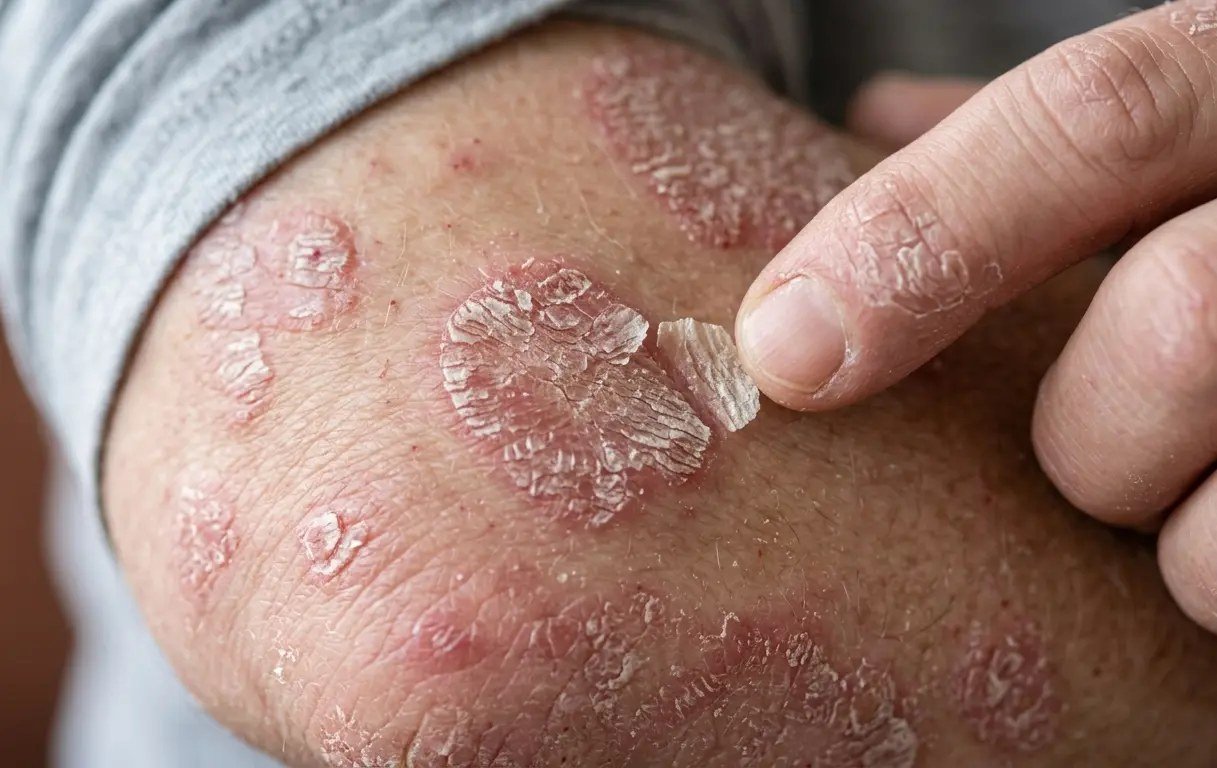
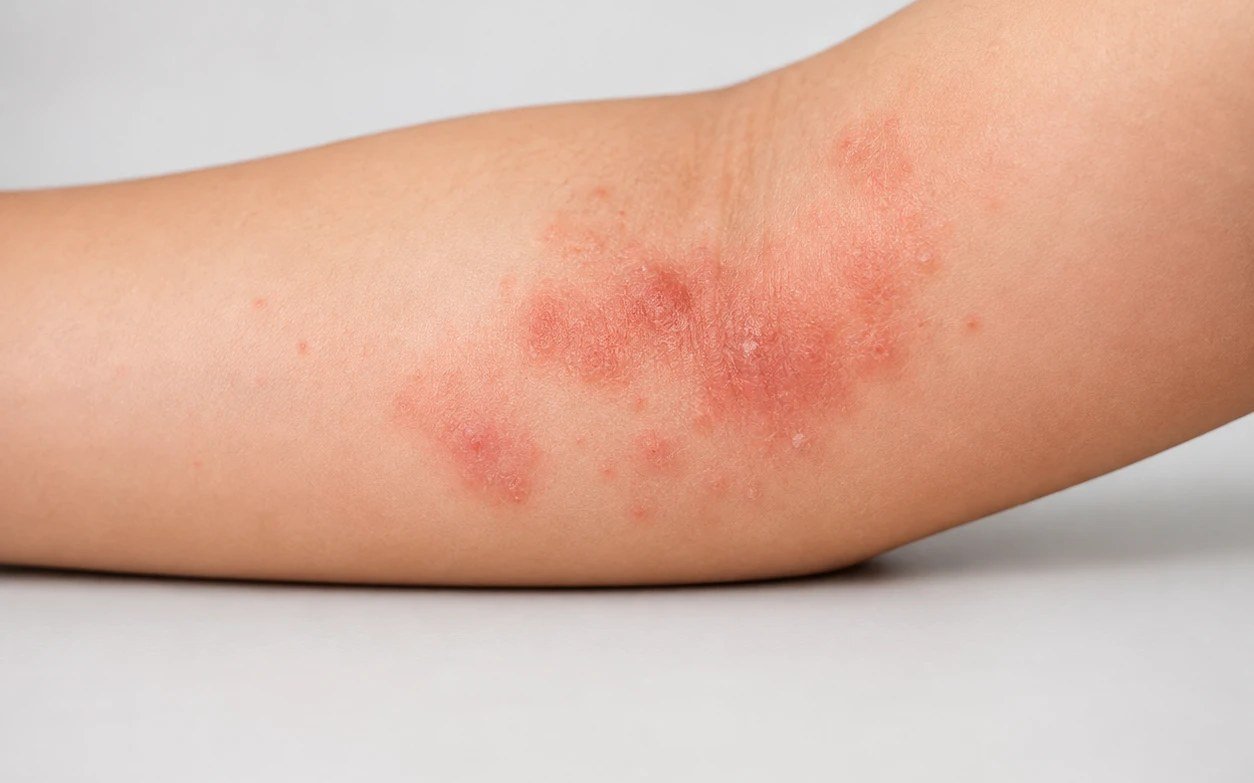
Eczema causes dry, intensely itchy and inflamed skin that comes and goes in flares. It affects babies, children and adults, and it can disturb sleep, work and confidence. While there is no permanent cure, eczema can be controlled very well with the right treatment and daily care.
What is eczema?
The most common type, atopic dermatitis, happens when the skin barrier does not hold moisture well and the immune system overreacts to everyday irritants. It often runs in families with asthma, hay fever or allergies. Eczema is not contagious.
Where does eczema appear?
- Babies: cheeks, scalp and outer arms and legs.
- Children: inside the elbows, behind the knees, wrists and ankles.
- Adults: hands, eyelids, neck and skin folds; the skin may become thick and darker from repeated scratching.
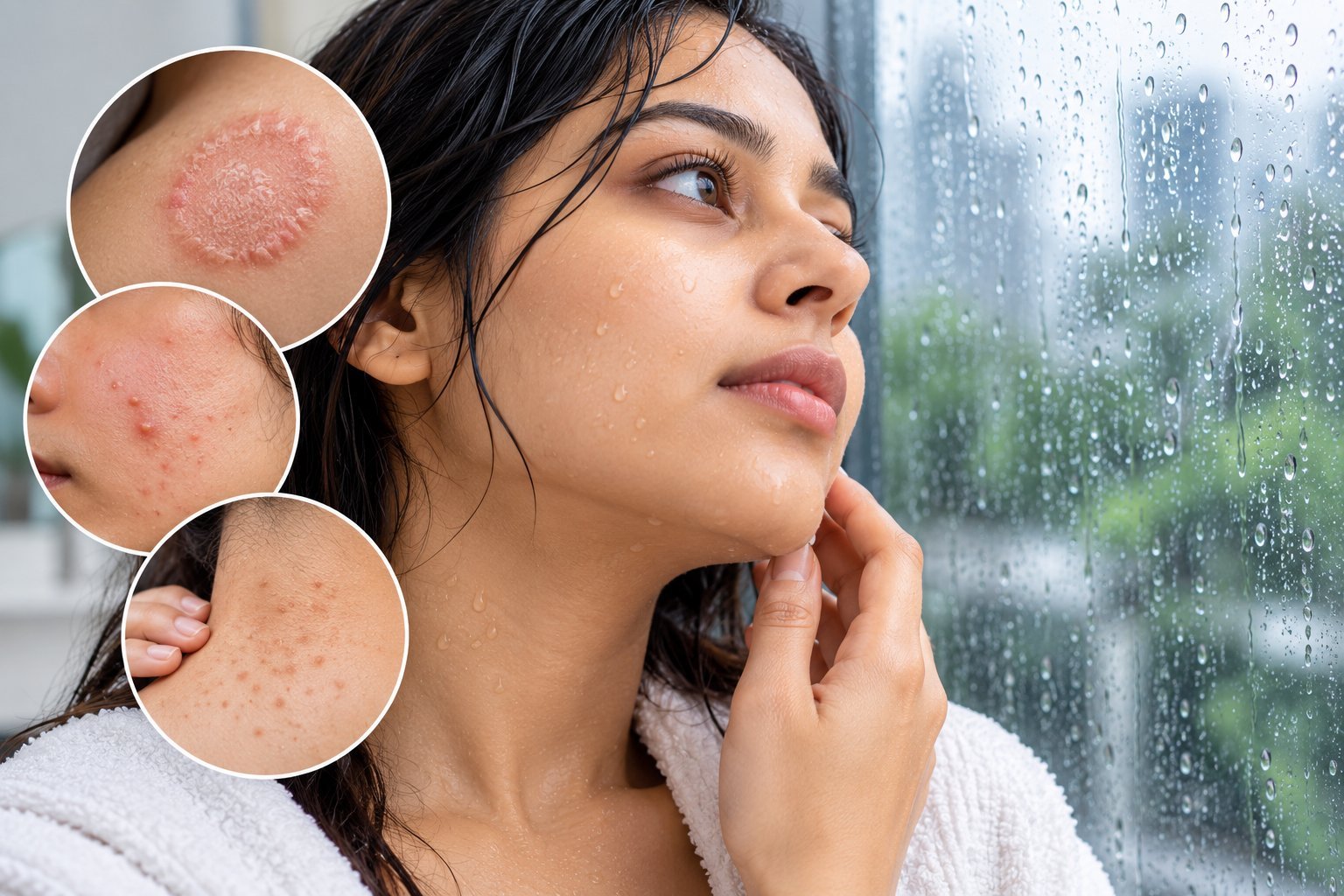
On Indian skin, eczema patches may look dark brown or grey rather than red, and often leave temporary pigmentation as they heal.
Common eczema triggers
- Harsh soaps, detergents and fragranced products
- Hot water and long baths
- Sweat and heat in summer; dry air in winter
- Wool and rough synthetic fabrics
- Dust mites, pollen and pet dander
- Stress and poor sleep
- Skin infections
How eczema is treated
Moisturisers — the foundation
Thick, fragrance-free moisturisers applied generously at least twice a day repair the skin barrier and reduce flares. This is the single most important step.
Anti-inflammatory creams
Prescription creams calm flares quickly. Used correctly under supervision, they are safe and effective. The problem is unsupervised use of strong steroid creams bought over the counter, which can thin the skin.
Steroid-free creams
Non-steroid prescription creams are useful for the face, eyelids and for long-term control.
Treating infection and itch
Antibiotics or antiseptics may be needed if eczema becomes infected. Antihistamines can help sleep during severe itching.
Advanced treatment for severe eczema
Phototherapy, oral immune-modulating medicines and newer targeted therapies are options for moderate to severe eczema that does not respond to creams.
A daily eczema care routine
- Short, lukewarm baths or showers — under 10 minutes.
- A gentle, soap-free cleanser.
- Pat dry and apply moisturiser within 3 minutes.
- Loose cotton clothing; wash new clothes before wearing.
- Keep nails short to reduce damage from scratching.
- Use treatment creams exactly as prescribed — not more, not less.
Eczema in children
Many children improve as they grow older. Parents often worry about food allergies; while food can trigger eczema in some young children, unnecessary diet restriction can harm nutrition. Testing and diet changes should be guided by a doctor.
When to see a dermatologist
See a doctor if eczema disturbs sleep, does not improve with moisturisers, keeps returning, looks infected (oozing, yellow crusts, pain), or if you have been using strong creams from the pharmacy. Book at our dermatology clinic in Ahmedabad.
Frequently asked questions
Can eczema be cured permanently? +
There is no permanent cure, but eczema can be controlled very well. Many children grow out of it, and adults can keep flares rare with good skin care and treatment.
Are steroid creams safe for eczema? +
Yes, when prescribed by a doctor and used correctly for the right duration. Problems arise from long-term unsupervised use of strong over-the-counter steroid creams.
Is eczema contagious? +
No. Eczema cannot spread from person to person.

Dr. Dhwani Shah (Vakta)
MBBS, DDVL · Consultant Dermatologist & Aesthetic Physician, Derma Wellness & Aesthetic Clinic, Ahmedabad · 20+ years of experience
This article is for general information only and is not a substitute for a medical consultation. Treatment suitability, sessions and results vary from person to person. Book a consultation for advice specific to your skin.