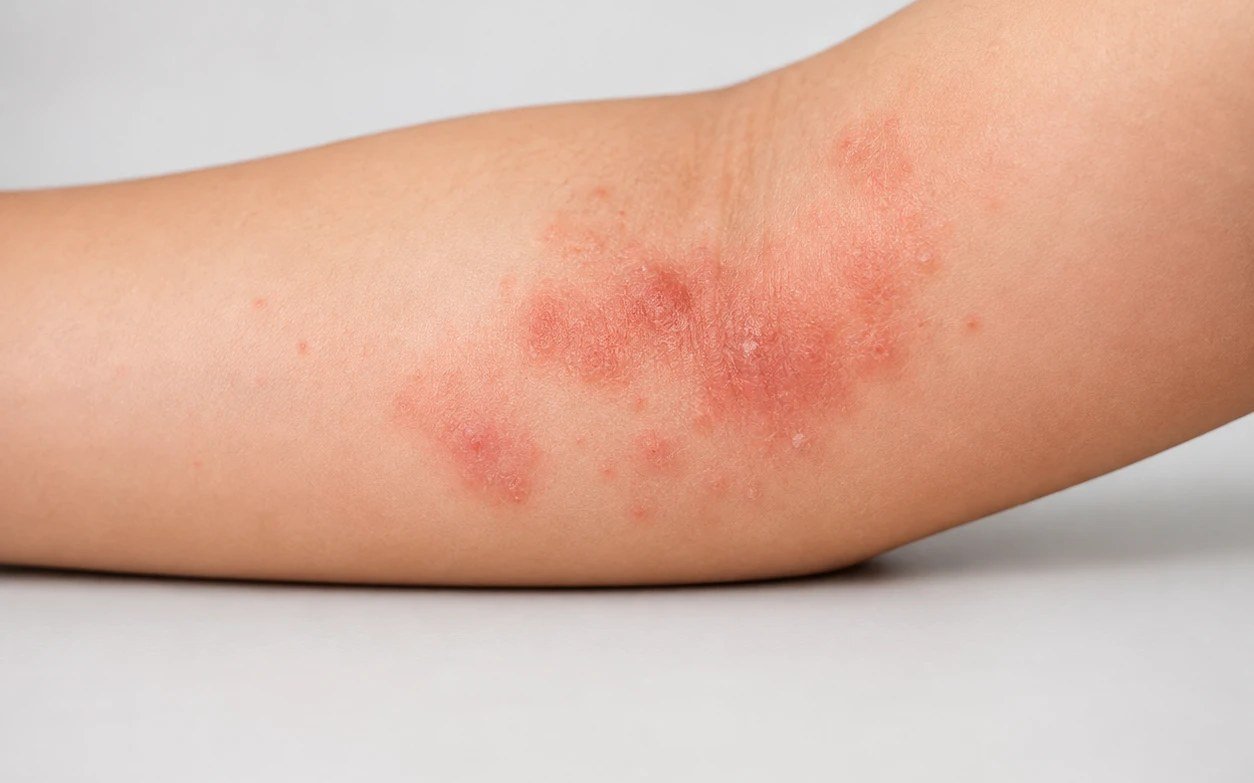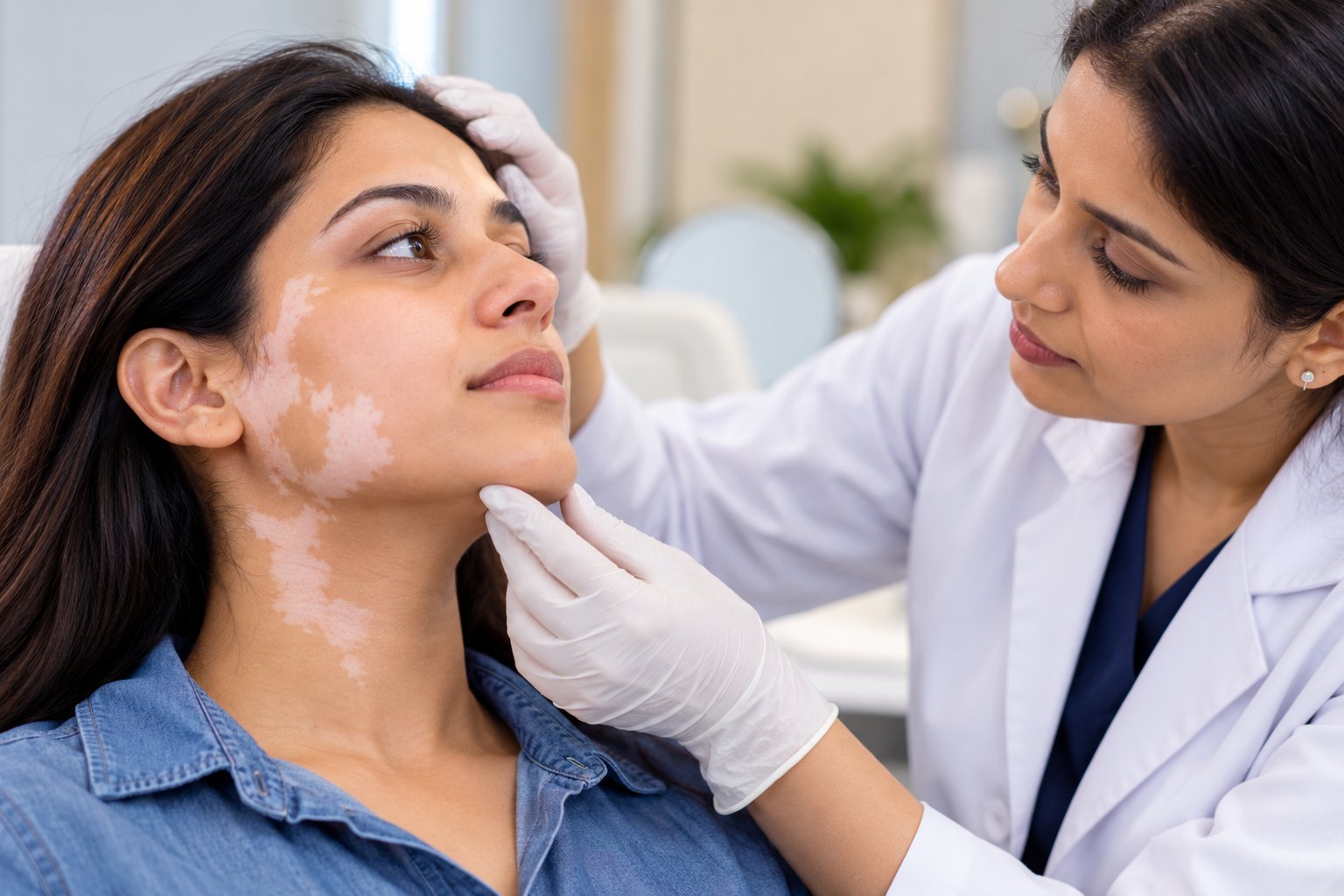
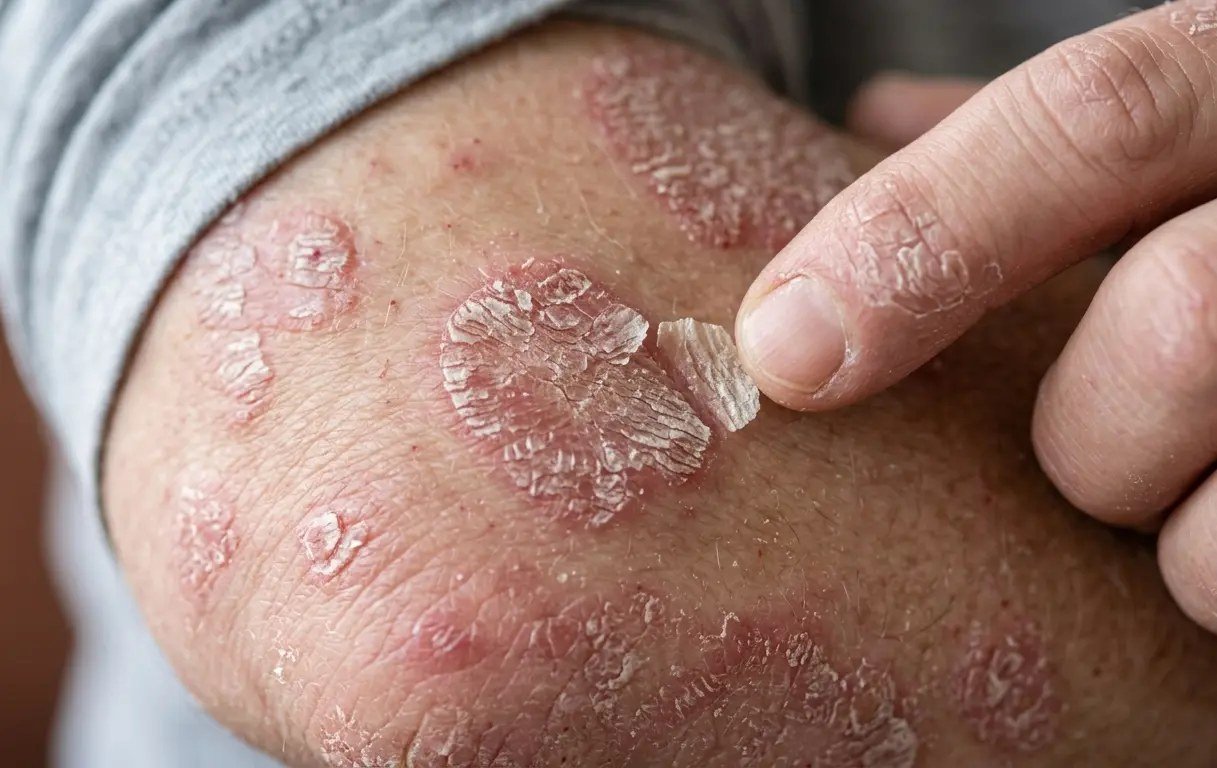
Psoriasis causes thick, scaly patches of skin that can itch, crack and bleed. It is a long-term condition, but it is not contagious, and modern treatment can keep it well controlled. Here is what every patient should know.
What is psoriasis?
Psoriasis is an immune-mediated condition. Overactive immune signals cause skin cells to multiply far faster than normal, so they pile up on the surface as thick, silvery scales. It often runs in families and tends to come and go in flares.
Common symptoms
- Raised, well-defined patches with silvery-white scales
- Typical sites: scalp, elbows, knees, lower back, and nails
- Itching, burning or cracking
- Nail pitting, thickening or separation
- Thick scalp scaling that may be mistaken for dandruff — see dandruff vs seborrheic dermatitis
On Indian skin, psoriasis patches can look purplish or dark brown rather than pink, and may leave temporary dark marks as they heal.
Psoriasis and joint pain
Some people with psoriasis develop psoriatic arthritis — joint pain, swelling or morning stiffness, especially in the fingers, toes, heels or lower back. Report any joint symptoms early, because early treatment prevents joint damage.
Common triggers
- Stress
- Throat and other infections
- Skin injury, scratches and cuts (new patches can form at injury sites)
- Smoking and alcohol
- Certain medicines
- Cold, dry weather
- Stopping strong steroid medicines suddenly
Modern treatment options
Topical treatments
For mild psoriasis, prescription creams, ointments and medicated shampoos reduce scaling and inflammation.
Phototherapy
Controlled narrowband UVB light therapy, given a few times a week, is effective for widespread psoriasis.
Oral medicines
For moderate to severe psoriasis or psoriatic arthritis, oral medicines calm the immune system. They need regular monitoring with blood tests.
Biologics and targeted therapies
For severe or resistant psoriasis, biologic injections and newer targeted medicines can dramatically clear skin. They are prescribed after careful evaluation.
Daily habits that help
- Moisturise thick patches generously, especially after bathing.
- Avoid picking scales or scratching.
- Stop smoking and limit alcohol.
- Maintain a healthy weight — it improves treatment response.
- Never stop prescribed medicines suddenly without your doctor's advice.
Psoriasis is more than skin
Psoriasis is linked with a higher risk of joint disease, diabetes, high blood pressure and heart disease, as well as anxiety and low mood. Good care looks at the whole person, not just the patches.
When to see a dermatologist
See a dermatologist if you have scaly patches that do not settle, nail changes, joint pain, or psoriasis affecting your sleep, work or confidence. Book at our skin clinic in Ahmedabad.
Frequently asked questions
Is psoriasis contagious? +
No. Psoriasis cannot spread from person to person through touch or any contact.
Can psoriasis be cured? +
There is no permanent cure yet, but modern treatments can clear the skin or keep psoriasis well controlled for long periods.
Is psoriasis related to diet? +
Diet does not cause psoriasis, but maintaining a healthy weight, limiting alcohol and not smoking can reduce flares and improve treatment response.

Dr. Dhwani Shah (Vakta)
MBBS, DDVL · Consultant Dermatologist & Aesthetic Physician, Derma Wellness & Aesthetic Clinic, Ahmedabad · 20+ years of experience
This article is for general information only and is not a substitute for a medical consultation. Treatment suitability, sessions and results vary from person to person. Book a consultation for advice specific to your skin.