Vitiligo causes white patches on the skin, and in India it also carries a heavy social stigma built on myths. As dermatologists, we want patients and families to know the facts: vitiligo is not contagious, it is not caused by food, and it can be treated.
What is vitiligo?
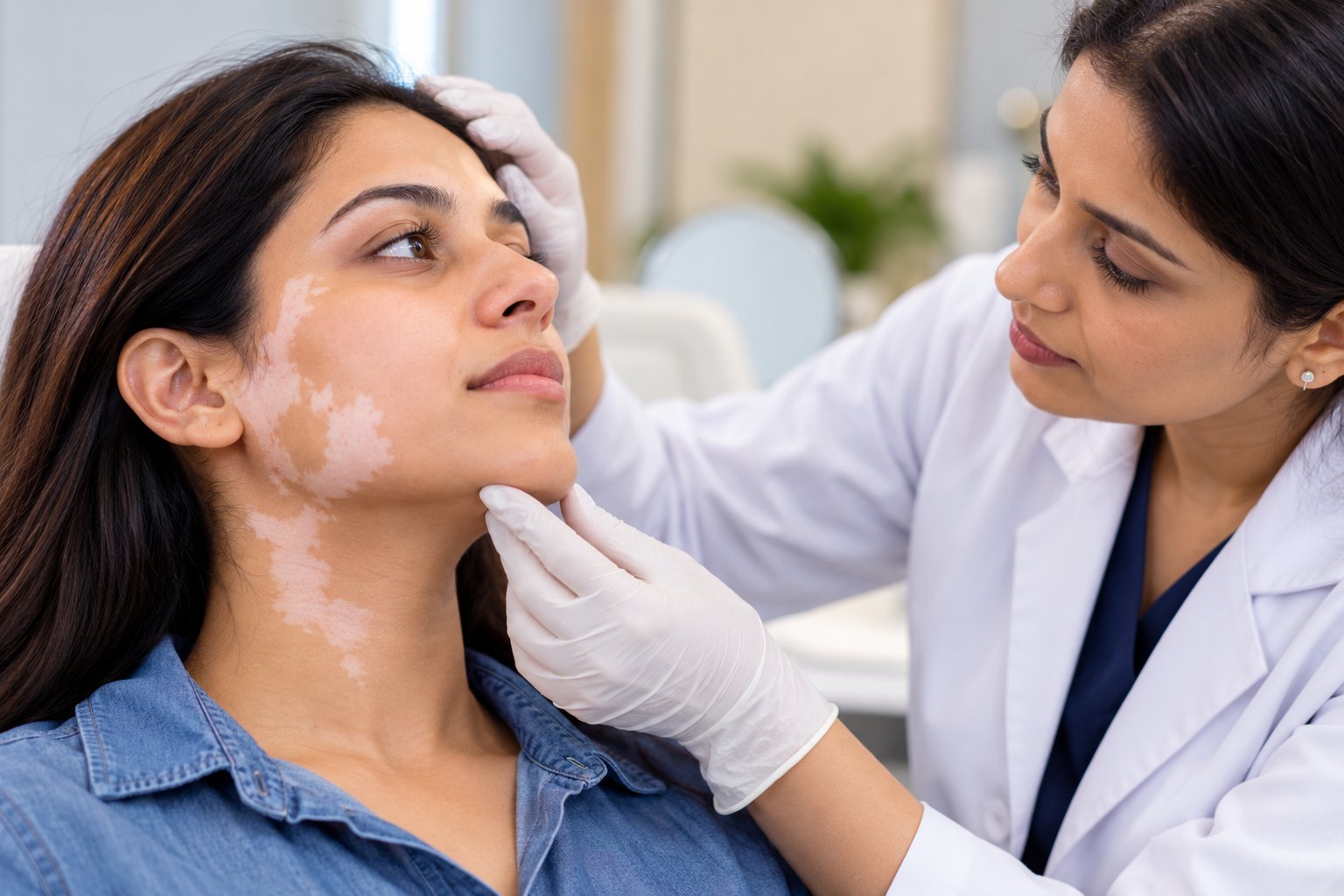
Vitiligo is a condition in which the immune system attacks melanocytes — the cells that make skin pigment. The result is milky-white patches, commonly on the face, hands, feet, lips and around joints. It can appear at any age.
Common myths — and the facts
- Myth: Vitiligo is contagious. Fact: It cannot spread by touch, sharing food or living together.
- Myth: Eating fish with milk, or sour foods, causes vitiligo. Fact: There is no scientific evidence for any food causing vitiligo.
- Myth: Vitiligo is a form of leprosy. Fact: They are completely different conditions.
- Myth: Nothing can be done. Fact: Many patients regain significant pigment with the right treatment.
Types of vitiligo
Non-segmental vitiligo is the most common type, often appearing symmetrically on both sides of the body. Segmental vitiligo affects one area or side and usually stabilises sooner. Knowing the type helps decide treatment.
Modern treatment options
Topical treatments
Prescription creams that calm the immune response are first-line for small or early patches, particularly on the face.
Oral medication
For rapidly spreading vitiligo, short courses of oral treatment may be used to stop progression, under close supervision.
Phototherapy
Narrowband UVB light therapy is one of the most effective ways to stimulate repigmentation, especially for widespread patches. Targeted excimer light treats smaller areas.
Surgical options
For patches that have been stable for at least a year, grafting procedures can transfer pigment cells from normal skin.
What to expect
- Response varies: the face and neck often respond best; hands and feet are slower.
- Repigmentation takes months, so patience and consistency are essential.
- Sun protection on white patches prevents burning.
Living with vitiligo
Vitiligo affects how people feel about their appearance, and emotional support matters as much as medical treatment. Medical-grade camouflage products can also help in daily life.
When to see a dermatologist
If you notice new white patches, consult early — not every white patch is vitiligo, and early treatment gives the best chance of repigmentation. Book at our dermatology clinic in Ahmedabad.
Frequently asked questions
Is vitiligo contagious? +
No. Vitiligo cannot spread from person to person through touch, food or any contact.
Can vitiligo be cured completely? +
There is no permanent cure yet, but many patients regain significant pigment with treatment, and progression can often be stopped.
Which treatment is best for vitiligo? +
It depends on the type, extent and activity. Options include prescription creams, phototherapy, oral medication and surgical grafting for stable patches.

Dr. Dhwani Shah (Vakta)
MBBS, DDVL · Consultant Dermatologist & Aesthetic Physician, Derma Wellness & Aesthetic Clinic, Ahmedabad · 20+ years of experience
This article is for general information only and is not a substitute for a medical consultation. Treatment suitability, sessions and results vary from person to person. Book a consultation for advice specific to your skin.