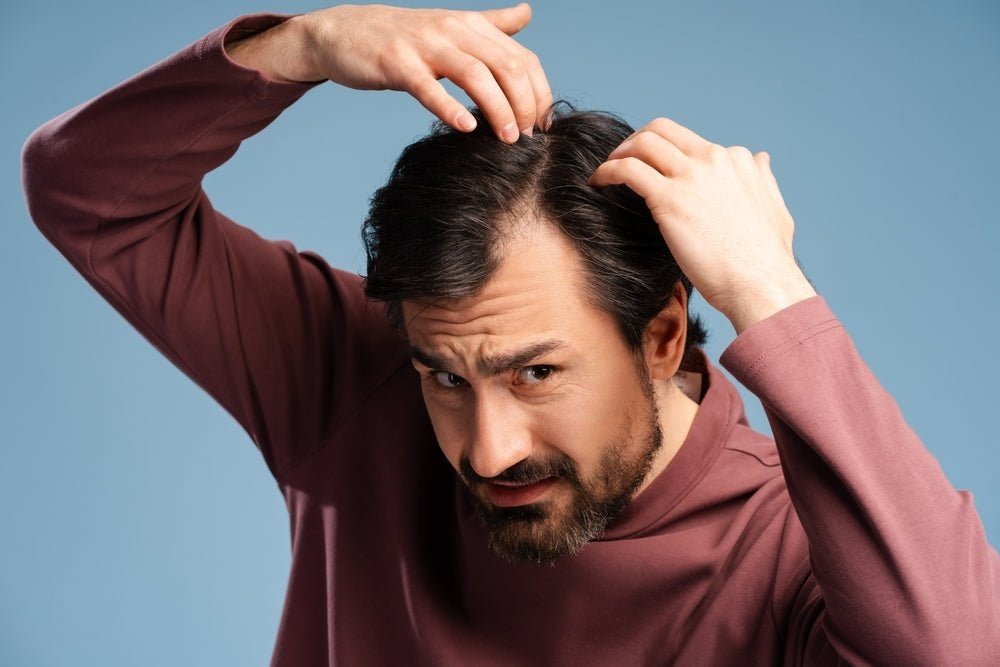
Many men first notice it in photographs: a hairline that has crept back, or the crown showing under bright lights. Hair fall in men is extremely common — and today it is also very treatable, especially when you start early. Here is what causes it and what genuinely works.
The most common cause: male pattern baldness
Male pattern baldness (androgenetic alopecia) accounts for the vast majority of hair loss in men. It is genetic, and it is driven by a hormone called DHT, which gradually shrinks sensitive hair follicles. Each new hair grows thinner and shorter until the follicle stops producing visible hair.
It typically follows a recognisable pattern:
- Recession at the temples, forming an "M" shaped hairline
- Thinning at the crown
- Gradual merging of the two areas over years
It can start as early as the late teens or twenties, and it progresses slowly — which is why early treatment saves the most hair.
Other causes of hair fall in men
Stress and illness (telogen effluvium)
Heavy, diffuse shedding 2–3 months after fever, dengue, COVID, surgery, major stress or crash dieting. It usually recovers once the trigger passes.
Nutritional deficiencies
Low iron, vitamin D, vitamin B12 or protein — common in vegetarian diets and in men who skip meals.
Thyroid problems
Both underactive and overactive thyroid can cause thinning.
Gym supplements and steroids
Anabolic steroids and some "testosterone boosters" can accelerate pattern baldness in men who are genetically prone.
Scalp conditions
Severe dandruff, seborrheic dermatitis and fungal infections inflame the scalp. See dandruff or seborrheic dermatitis.
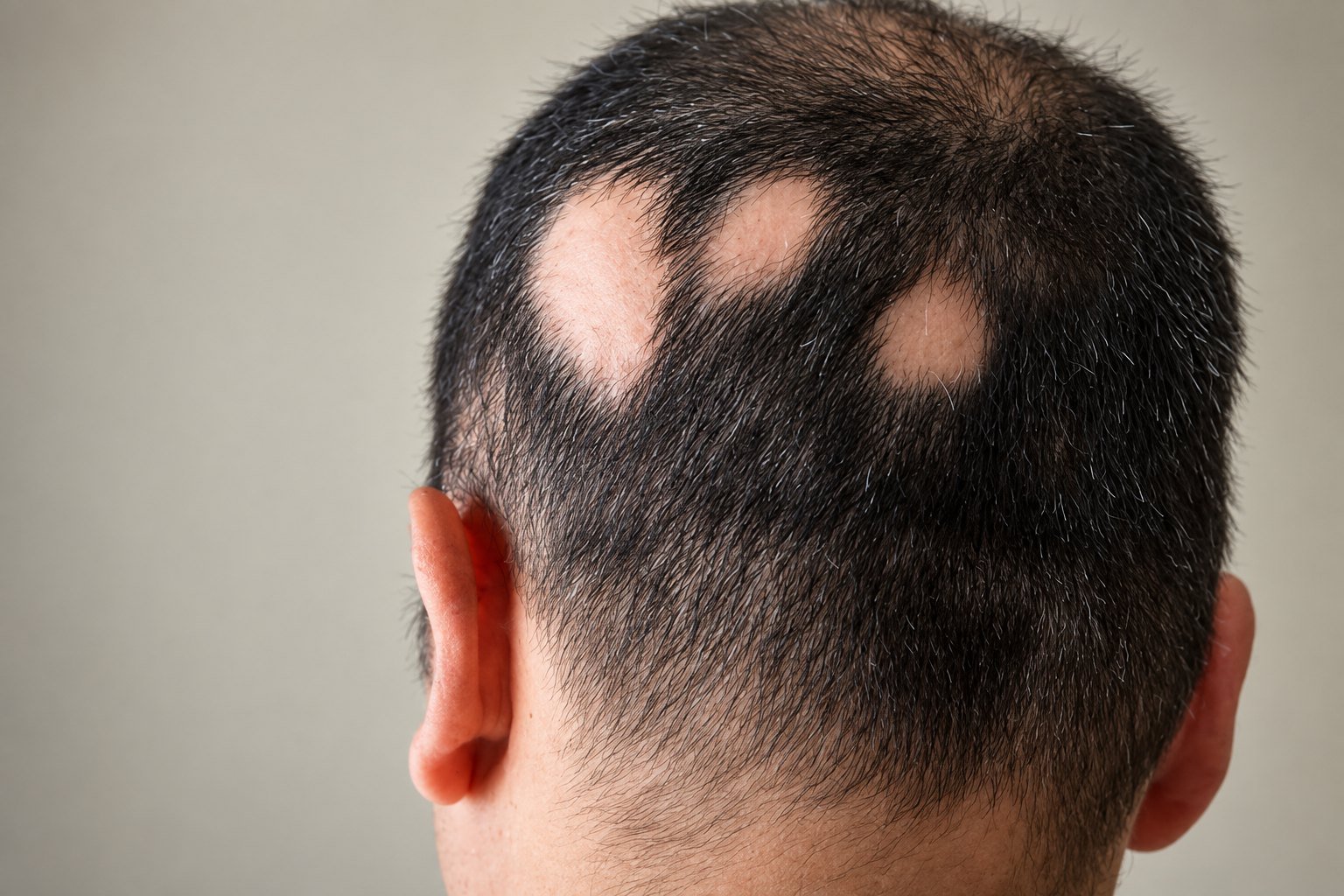
Patchy hair loss
Round bald patches on the scalp or beard are usually alopecia areata, which is treated differently. Read our alopecia areata guide.
How a dermatologist diagnoses hair fall
- A detailed history: when it started, family history, diet, illness, supplements and stress.
- Scalp examination with a trichoscope (a magnified scalp camera) to check follicle size and scalp health.
- Blood tests when needed — for example haemoglobin, ferritin, thyroid and vitamin levels.
- Standardised photographs so progress can be measured objectively.
Treatments that work for male hair loss
Prescription medicines
Clinically proven topical and oral medicines can slow or stop pattern hair loss and regrow hair in many men. They work best when started early and used consistently. Your dermatologist will explain the benefits and possible side effects and choose what suits you.
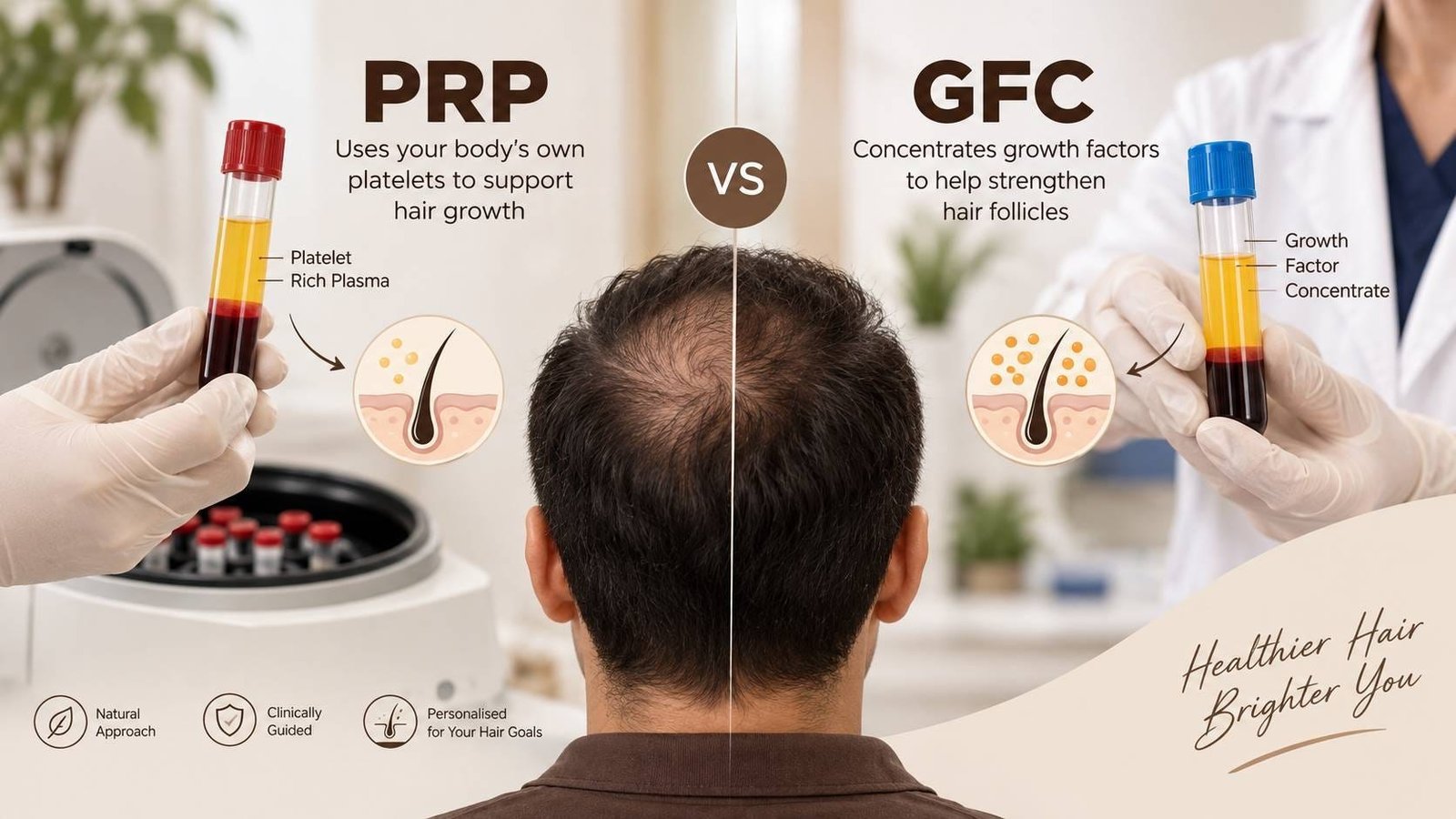
PRP and GFC therapy
Platelet-rich plasma and growth factor concentrate use your own blood to stimulate weakening follicles. They work well alongside medicines. Compare them in GFC vs PRP, and see PRP hair treatment in Ahmedabad.
Mesotherapy
Micro-injections of nourishing solutions into the scalp, sometimes used as an add-on.
Hair transplant
For advanced baldness where follicles have been lost, transplantation moves healthy follicles from the back of the scalp. Medical treatment is still needed afterwards to protect the remaining hair.
What to expect
- Shedding usually reduces within 2–3 months of starting treatment.
- Visible density improvement takes 4–6 months; best results appear at 12 months.
- Pattern hair loss is long-term, so maintenance is needed to keep results.
- Bald areas that have been shiny and smooth for years respond poorly to medicines alone.
Myths about hair fall in men
- Wearing a helmet or cap causes baldness — it does not, though a dirty, sweaty helmet can irritate the scalp.
- Oiling regrows hair — oil conditions hair but does not reverse pattern baldness.
- Shaving the head makes hair thicker — it does not change follicles.
- Only older men go bald — many men start in their twenties.
When to see a dermatologist
If you notice a receding hairline, a thinning crown, or shedding that lasts more than three months, book an assessment. The earlier treatment starts, the more hair can be saved. Visit our hair loss specialist clinic in Ahmedabad.
Frequently asked questions
At what age does male pattern baldness start? +
It can begin any time after puberty. Many men notice early signs in their twenties, and it progresses gradually over years.
Can male pattern baldness be reversed? +
It can be stopped and partly reversed in many men, especially when treatment starts early. Long-bald areas usually need a hair transplant.
Does PRP work for hair fall in men? +
PRP can reduce shedding and improve thickness, particularly when combined with prescription treatment. It works best in early to moderate hair loss.

Dr. Dhwani Shah (Vakta)
MBBS, DDVL · Consultant Dermatologist & Aesthetic Physician, Derma Wellness & Aesthetic Clinic, Ahmedabad · 20+ years of experience
This article is for general information only and is not a substitute for a medical consultation. Treatment suitability, sessions and results vary from person to person. Book a consultation for advice specific to your skin.