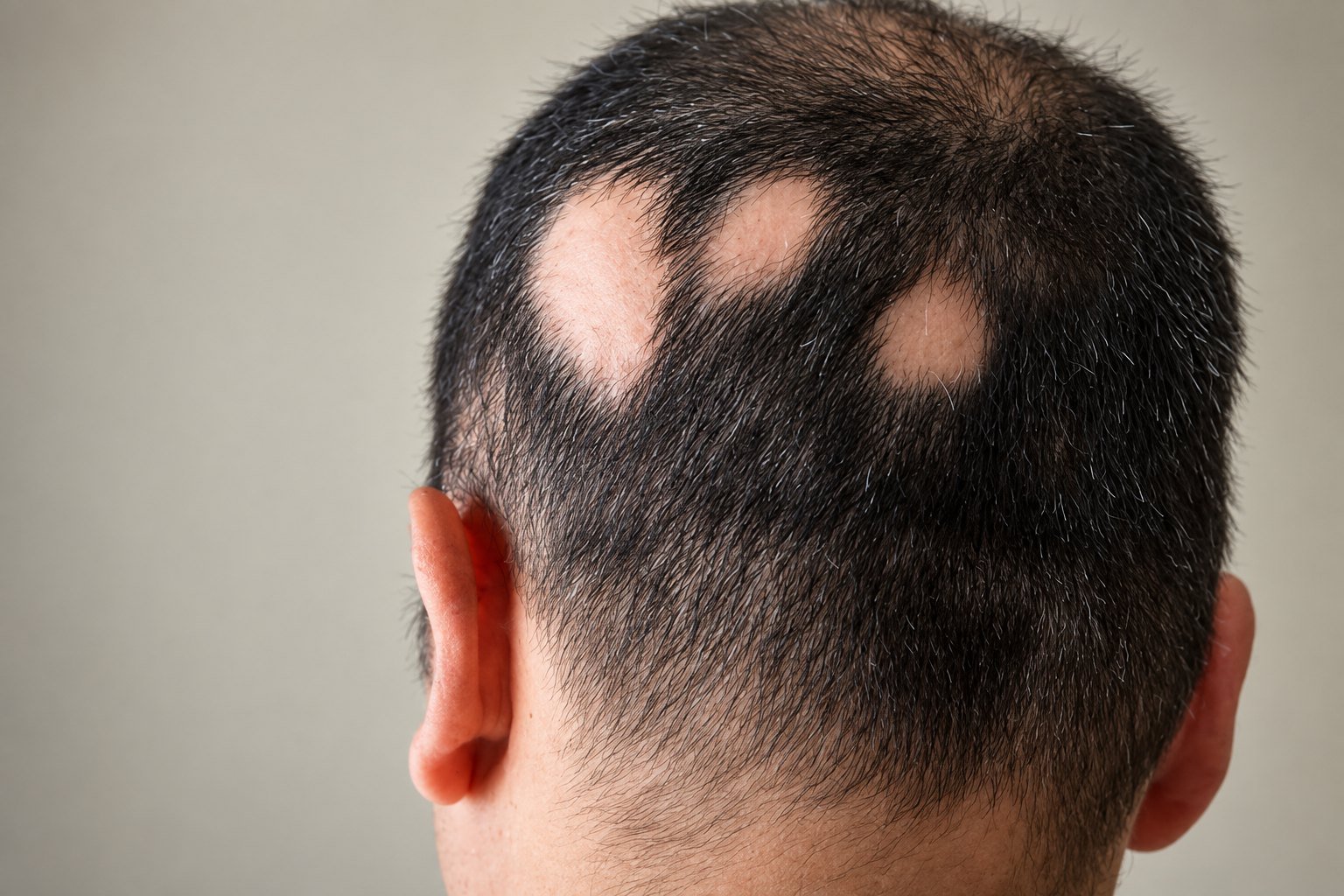
Discovering a smooth, round bald patch on your scalp — or in your beard — can be alarming. In most cases, the cause is alopecia areata, a common condition that is very treatable. The good news: in many people, hair grows back.
What is alopecia areata?
Alopecia areata is an autoimmune condition. The immune system mistakenly attacks hair follicles, causing them to stop producing hair. Importantly, the follicles are not destroyed — which is why regrowth is possible.
It affects men, women and children, and is not contagious.
Signs and patterns
- One or more round or oval smooth bald patches, often noticed suddenly
- Patches in the beard (alopecia barbae), eyebrows or eyelashes
- Short broken "exclamation mark" hairs at the edge of a patch
- Nail changes such as tiny pits, in some people
- Rarely, loss of all scalp hair (alopecia totalis) or all body hair (alopecia universalis)
What triggers alopecia areata?
The exact trigger is not fully understood. It is more common in people with a family history, and in those with other autoimmune conditions such as thyroid disease or vitiligo. Many patients report a period of significant stress, illness or infection beforehand.
Will the hair grow back?
Often, yes. Small single patches may regrow on their own within months. However, new patches can appear, and the course is unpredictable. Treatment speeds regrowth and helps control spreading. Regrowing hair may come in white or fine at first before regaining its normal colour.
How alopecia areata is treated
Steroid injections into the patch
For limited patches in adults, small injections given every 4–6 weeks are often the most effective first treatment.
Topical treatments
Prescription creams and lotions, especially useful for children or for patches where injections are not suitable.
Contact immunotherapy
A specialised treatment for extensive or long-standing patches.
Oral medicines for severe cases
For extensive or rapidly spreading alopecia areata, oral treatments — including newer targeted medicines — may be considered after careful evaluation and monitoring.
Supportive treatments
Treating associated conditions, correcting deficiencies and managing stress all support recovery.
Alopecia areata vs other hair loss
- Alopecia areata: smooth, well-defined bald patches, often sudden.
- Fungal infection (tinea capitis): scaly, itchy patches, often in children — needs antifungal treatment.
- Pattern hair loss: gradual thinning of the hairline or crown. See hair fall in men and hair fall in women.
- Hair pulling (trichotillomania): irregular patches with broken hairs of different lengths.
Living with alopecia areata
Hair loss can affect confidence and emotional wellbeing, and this deserves attention. Hairstyling, beard shaping, and in extensive cases, hair systems can help while treatment works. Speaking openly with your dermatologist about how it affects you is part of good care.
When to see a dermatologist
See a doctor promptly if you notice a bald patch, especially if new patches appear or existing ones spread. Early treatment gives the best chance of quick regrowth. Book at our hair loss clinic in Ahmedabad.
Frequently asked questions
Is alopecia areata permanent? +
Usually not. The hair follicles remain alive, so hair can regrow, often within months. Some people have recurring episodes.
Is alopecia areata caused by stress? +
Stress can trigger or worsen episodes in people who are prone to it, but the underlying cause is autoimmune.
Can alopecia areata affect the beard? +
Yes. Round bald patches in the beard are a common form, called alopecia barbae, and are treated in a similar way.

Dr. Dhwani Shah (Vakta)
MBBS, DDVL · Consultant Dermatologist & Aesthetic Physician, Derma Wellness & Aesthetic Clinic, Ahmedabad · 20+ years of experience
This article is for general information only and is not a substitute for a medical consultation. Treatment suitability, sessions and results vary from person to person. Book a consultation for advice specific to your skin.