Losing 50–100 hairs a day is normal. Clumps in the shower, a widening parting or a thinner ponytail are not. Hair fall in women almost always has an identifiable cause — and finding it is the difference between treatment that works and years of changing shampoos.
The most common causes of hair fall in women
Iron and vitamin deficiency
Low iron stores (ferritin) are extremely common in Indian women and a leading cause of diffuse shedding. Vitamin D and B12 deficiency also contribute.
Thyroid imbalance
Both underactive and overactive thyroid can cause hair thinning, often alongside fatigue or weight change.
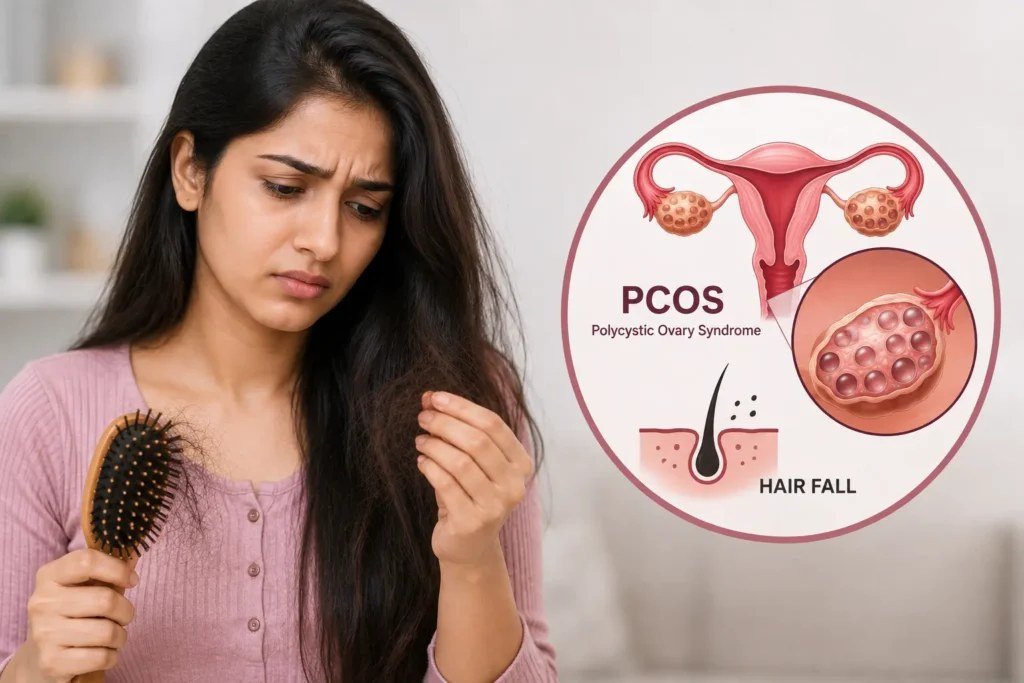
PCOS and hormonal imbalance
Raised androgen levels in PCOS can thin hair on the crown while causing acne or excess facial hair — a combination worth investigating.
Telogen effluvium (stress shedding)
Sudden heavy shedding 2–3 months after illness, fever, surgery, crash dieting, major stress or childbirth. It usually recovers once the trigger is resolved.
Female pattern hair loss
A gradual, genetic thinning at the parting and crown. It is progressive, so early treatment matters most.
Blood tests worth discussing with your doctor
- Complete blood count and serum ferritin
- Thyroid profile (TSH)
- Vitamin D and Vitamin B12
- Hormonal tests if PCOS is suspected
Your dermatologist decides which tests you need based on your history and scalp examination — not everyone needs every test.
How hair fall in women is treated
Correcting the cause
Treating deficiencies, thyroid and hormonal issues comes first. Without this, other treatments underperform.
Medical therapy
Prescription topical and oral treatments, chosen for your diagnosis, help stabilise shedding and support regrowth.
In-clinic treatments
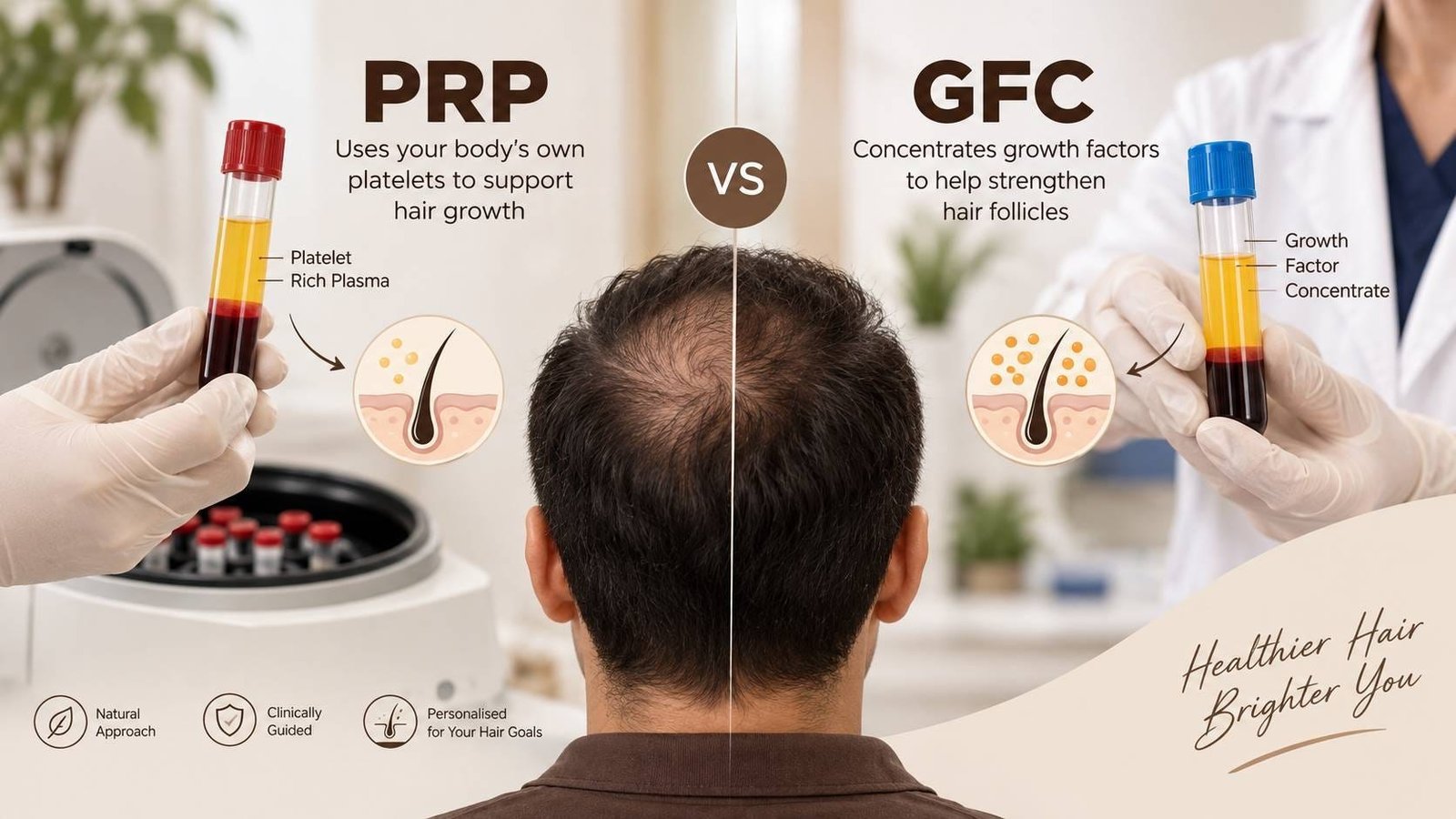
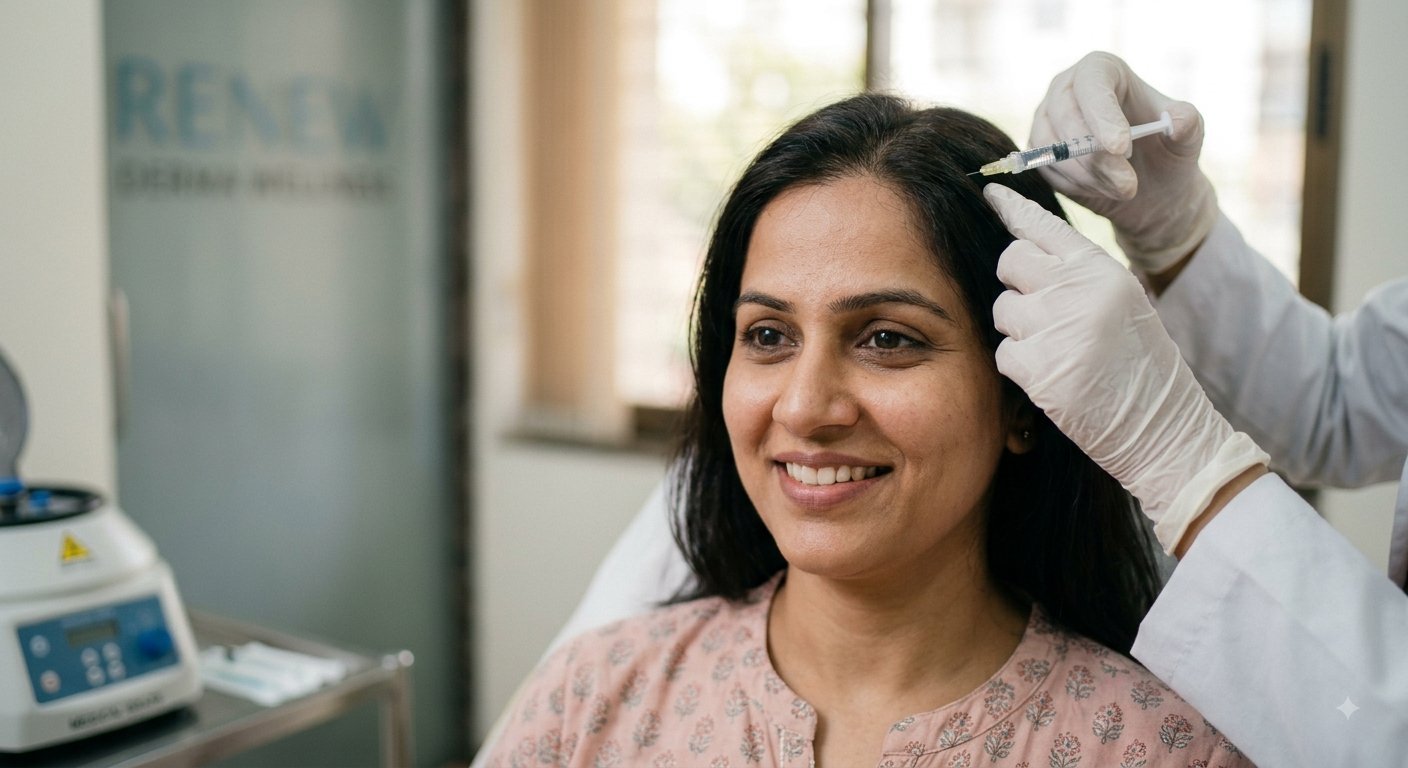
PRP therapy and mesotherapy stimulate weakened follicles and work well alongside medical treatment. Read our honest guide to PRP results and sessions.
See a dermatologist if you notice
- Shedding that lasts longer than 3 months
- A visibly widening parting or see-through crown
- Patchy bald spots
- Hair fall with irregular periods, acne or facial hair
How long until you see results?
Hair grows slowly. Reduced shedding usually shows in 6–8 weeks; visible density improvement takes 4–6 months. Progress is tracked with standardised photographs at our hair loss clinic in Ahmedabad.
Frequently asked questions
Which deficiency causes hair fall in women? +
Iron deficiency (low ferritin) is the most common, followed by vitamin D and B12 deficiency. A blood test confirms it before supplements are started.
Does PCOS cause hair loss? +
Yes. Higher androgen levels in PCOS can cause thinning on the crown. Managing PCOS alongside hair treatment gives the best results.
Is hair fall in women reversible? +
Shedding from deficiency, stress or thyroid usually reverses once treated. Female pattern hair loss can be stabilised and improved, especially when treated early.

Dr. Dhwani Shah (Vakta)
MBBS, DDVL · Consultant Dermatologist & Aesthetic Physician, Derma Wellness & Aesthetic Clinic, Ahmedabad · 20+ years of experience
This article is for general information only and is not a substitute for a medical consultation. Treatment suitability, sessions and results vary from person to person. Book a consultation for advice specific to your skin.