Around three months after delivery, many new mothers are alarmed by handfuls of hair in the comb. Here is the reassuring science — and the signs that mean it is time for a consultation.
Why it happens
During pregnancy, high oestrogen keeps hair in its growth phase — which is why pregnancy hair often looks its thickest. After delivery, hormones normalise and all that "held on" hair sheds together, usually starting 2–4 months postpartum. The medical name is telogen effluvium, and it is temporary.
The normal timeline
What to expect
- Months 2–4 postpartum: shedding begins, often dramatic around the hairline.
- Months 4–6: shedding peaks, then slows.
- By months 9–12: most mothers see clear regrowth — those "baby hairs" along the hairline are a good sign.
What helps at home
- Nutrition: protein, iron, vitamin D and B12 — pregnancy and breastfeeding deplete exactly the nutrients hair needs.
- Gentle handling: loose styles, wide-tooth combs, minimal heat.
- Skip the panic buys: expensive "hair growth" oils and gummies rarely outperform fixing an actual deficiency.
When it is more than postpartum shedding
See a hair specialist if shedding continues heavily beyond 12 months, you notice widening of your parting rather than regrowth, you have patchy bald spots, or you feel unusually tired (possible thyroid or iron issues — both common postpartum and both very treatable).
How we treat persistent cases
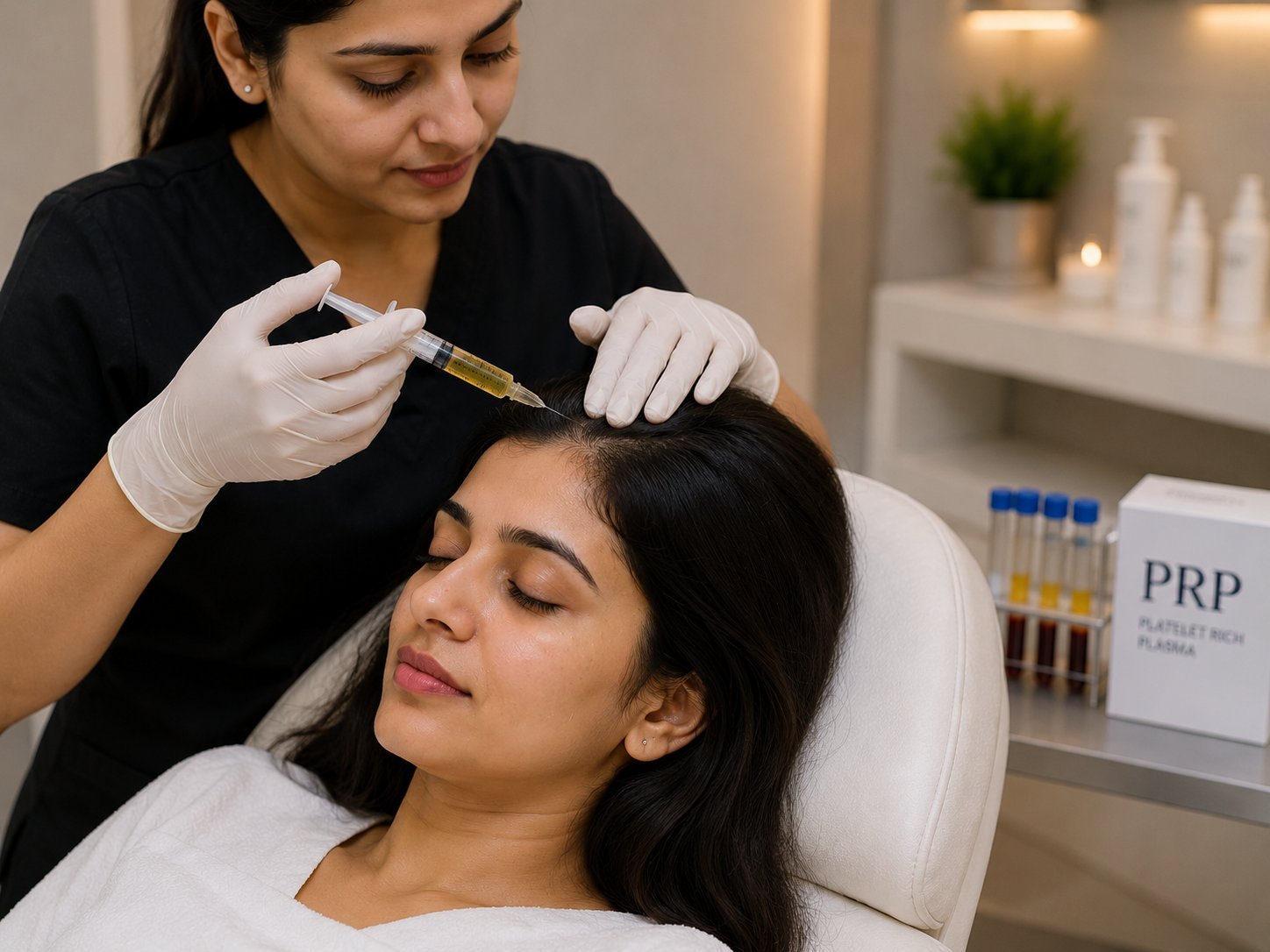
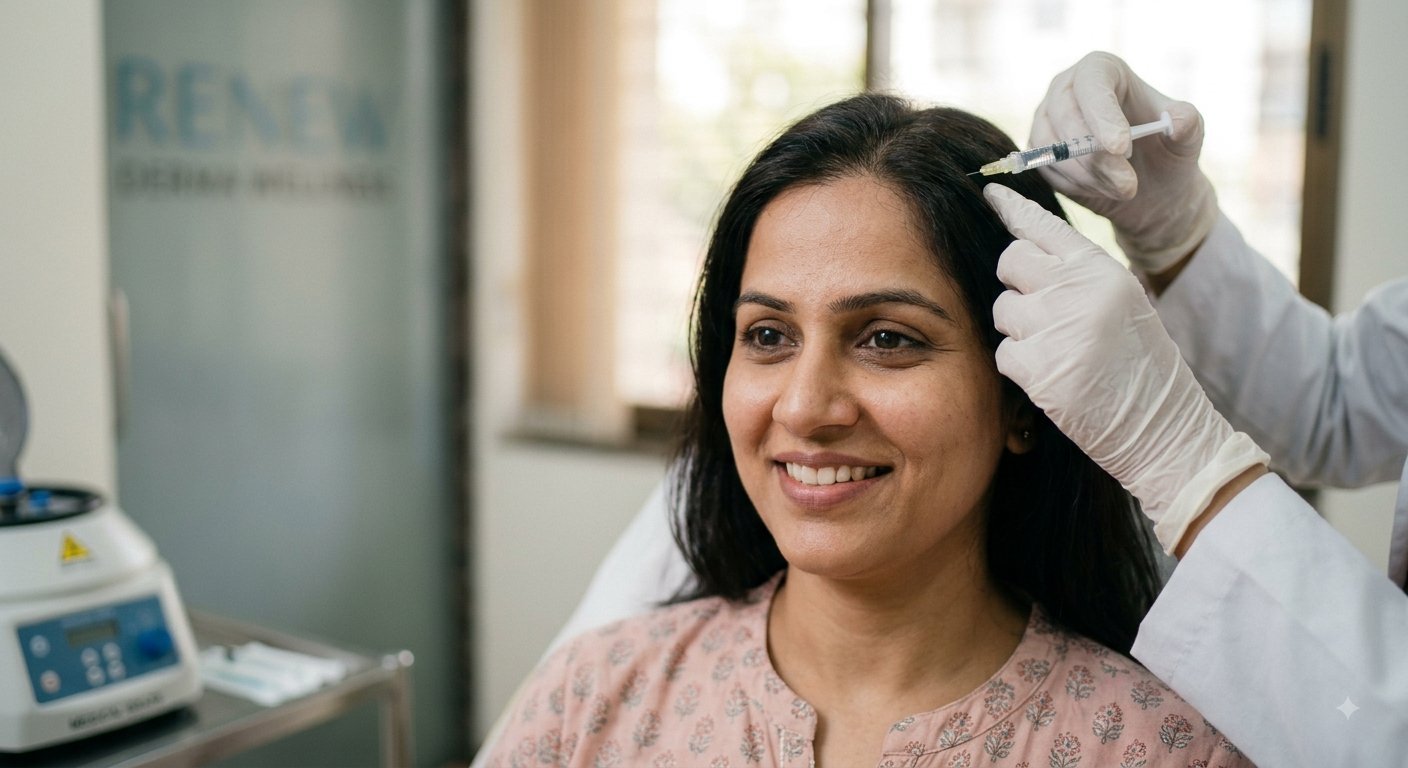
Diagnosis first: basic blood work identifies deficiencies and thyroid changes. Treatment then may include targeted supplementation, gentle topicals compatible with breastfeeding, and — once feeding allows — PRP therapy to accelerate density recovery. Read our full PRP guide for what to expect.

Dr. Dhwani Shah (Vakta)
MBBS, DDVL · Consultant Dermatologist & Aesthetic Physician, Derma Wellness & Aesthetic Clinic, Ahmedabad · 20+ years of experience
This article is for general information only and is not a substitute for a medical consultation. Treatment suitability, sessions and results vary from person to person. Book a consultation for advice specific to your skin.