If dermatologists agree on one product, it is sunscreen. It prevents tanning, melasma, premature ageing and skin cancers — and it is the make-or-break step in every pigmentation treatment we do. Yet most patients use it wrong, or not at all. Let's fix that.
Myth 1: "Dark skin doesn't need sunscreen"
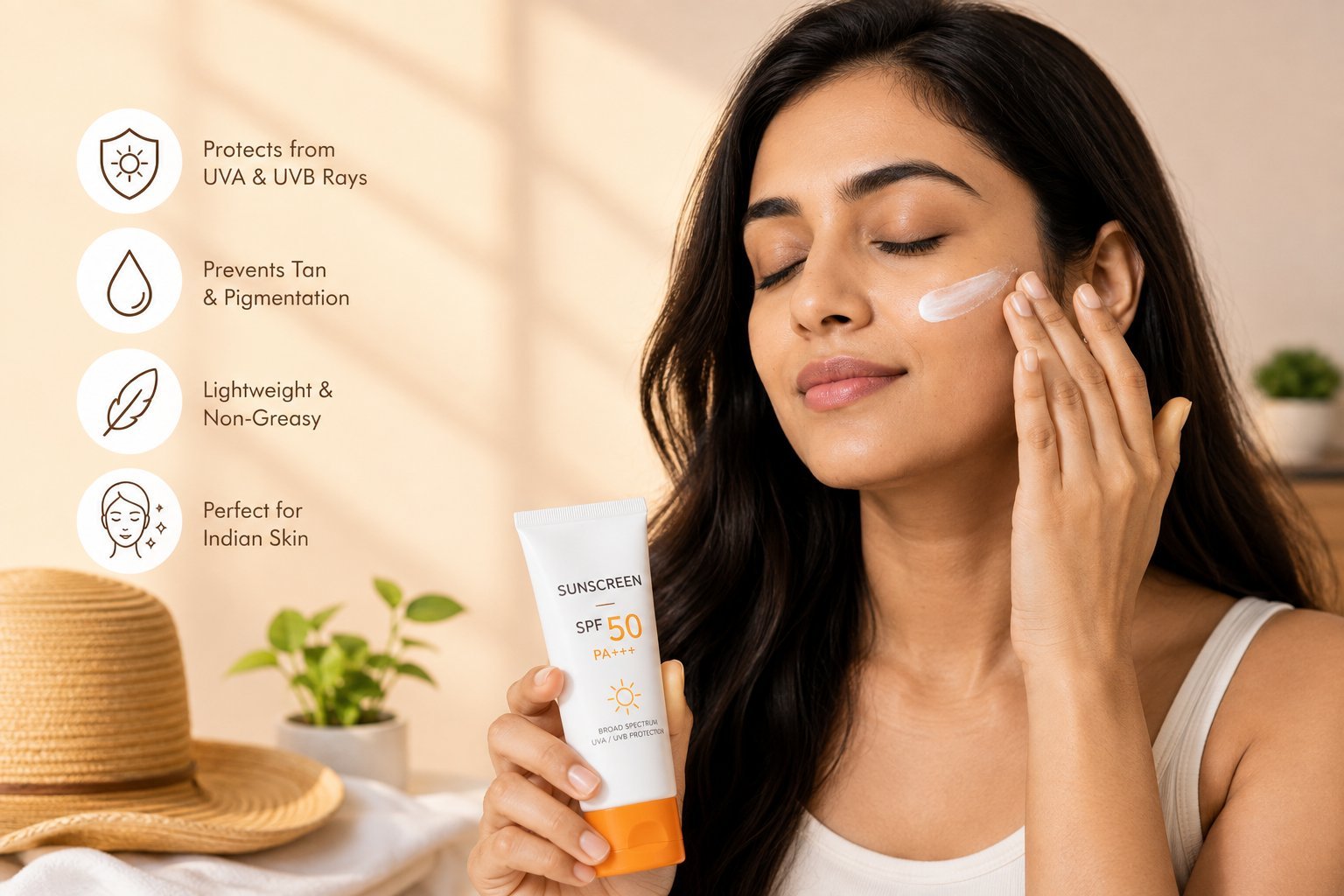
Melanin offers some natural protection, but Indian skin is more prone to pigmentation, not less. UV is the biggest trigger for tanning, melasma and dark marks after acne. If anything, dusky skin benefits from sunscreen more visibly than fair skin.
Myth 2: "SPF 100 is double SPF 50"
SPF 30 blocks ~97% of UVB; SPF 50 about 98%. Beyond SPF 50 the gains are marginal. What matters far more is how much you apply and whether you reapply. Choose SPF 30–50, broad-spectrum (UVA + UVB), labelled PA+++ or higher.
The white cast problem — solved
The chalky grey layer on dusky skin comes from mineral filters (zinc/titanium). Options that work beautifully on Indian tones:
- Modern chemical or hybrid sunscreens — invisible finish, no cast.
- Tinted mineral sunscreens — the tint neutralises the cast and doubles as light coverage.
- Gel or fluid textures for oily, humid-climate skin (very relevant in Ahmedabad).
How much, how often
The dermatologist rules
- Quantity: two finger-lengths for the face and neck. Most people apply a quarter of this.
- Timing: every morning, indoors or out — UVA passes through windows.
- Reapply: every 3–4 hours outdoors; sprays or compacts make touch-ups easy over makeup.
- Sensitive or acne-prone? Pick "non-comedogenic" gel formulas — sunscreen should never be the reason you skip it.
One honest note
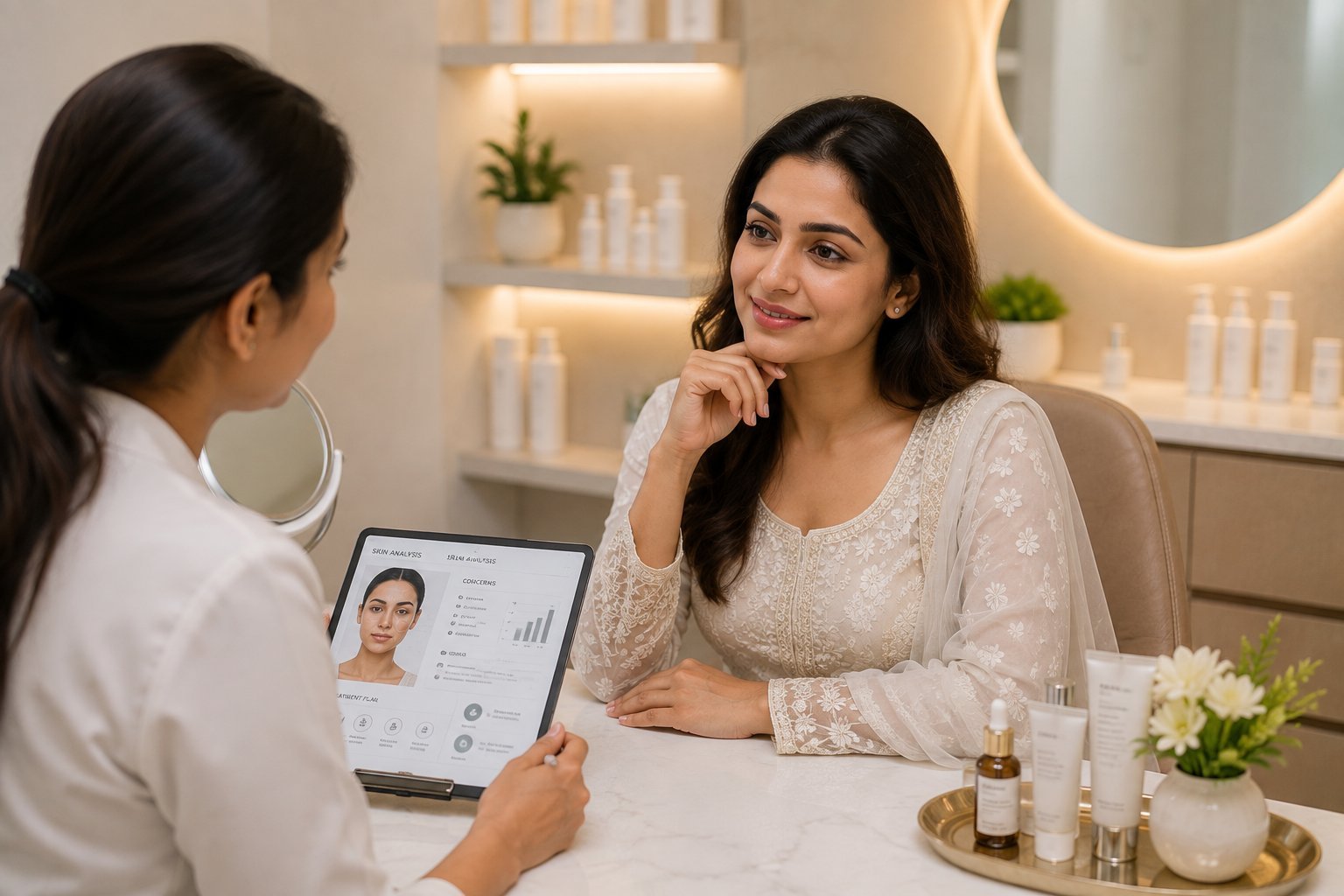
No cream we prescribe for pigmentation works without daily sunscreen. If you do just one thing from this article, do this. For product recommendations matched to your exact skin type, ask at your next consultation — we suggest options at every price point.

Dr. Dhwani Shah (Vakta)
MBBS, DDVL · Consultant Dermatologist & Aesthetic Physician, Derma Wellness & Aesthetic Clinic, Ahmedabad · 20+ years of experience
This article is for general information only and is not a substitute for a medical consultation. Treatment suitability, sessions and results vary from person to person. Book a consultation for advice specific to your skin.