Melasma — those stubborn brownish patches on the cheeks, forehead and upper lip — is one of the most common reasons patients visit our Ahmedabad clinic. It is also one of the most misunderstood. Here is what melasma really is, and what genuinely helps.
Why Indian skin gets melasma more easily
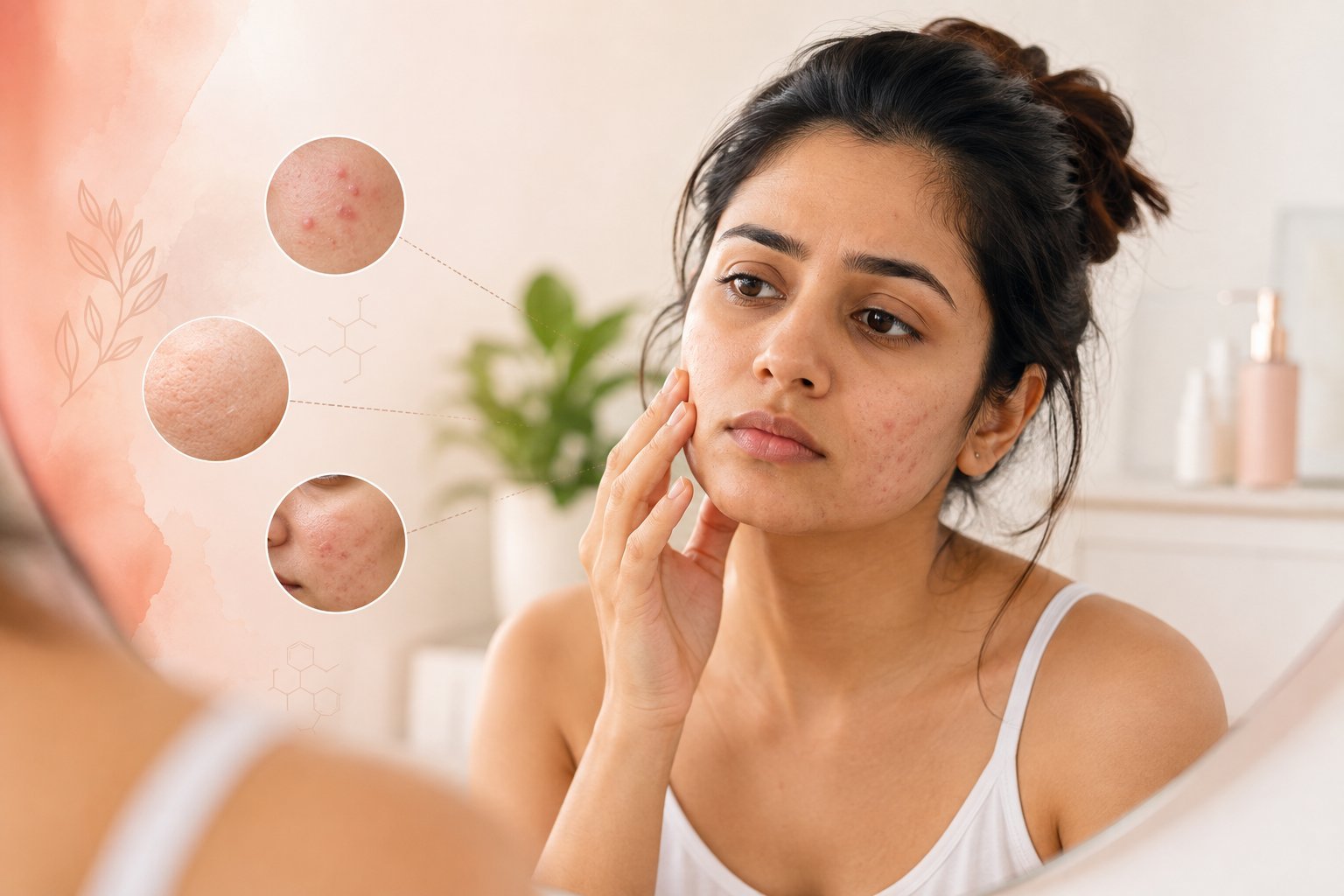
Melanin-rich skin has more active pigment cells. When those cells are triggered — by UV exposure, heat, hormones (pregnancy, thyroid, contraceptives), or genetics — they overproduce pigment in patches. India's strong sun plus a genetic tendency makes melasma extremely common, especially in women between 25 and 50.
Why fairness creams make it worse
Many over-the-counter "spot removal" creams contain unregulated steroids. They lighten skin temporarily, then cause rebound pigmentation, thinning and sensitivity. A large part of our melasma practice is undoing damage from these creams.
What actually works
1. Prescription depigmenting protocols
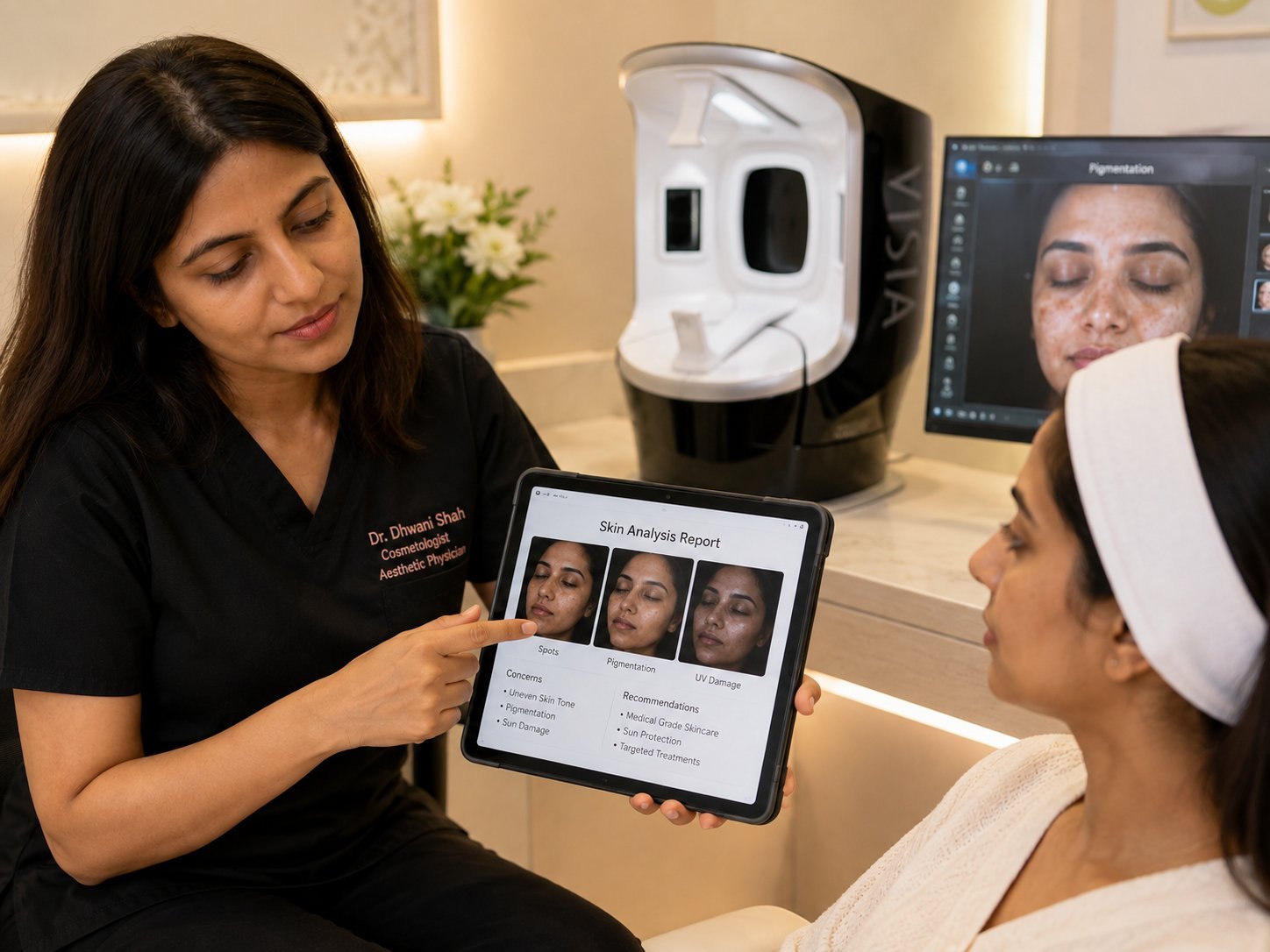
Dermatologist-grade combinations regulate melanin production safely. Expect visible lightening from 6–8 weeks, with best results at 12–16 weeks.
2. Medical peels
Depigmenting peels, chosen for your skin type and pigment depth, accelerate clearance — always in a supervised course, never as one-off salon experiments.
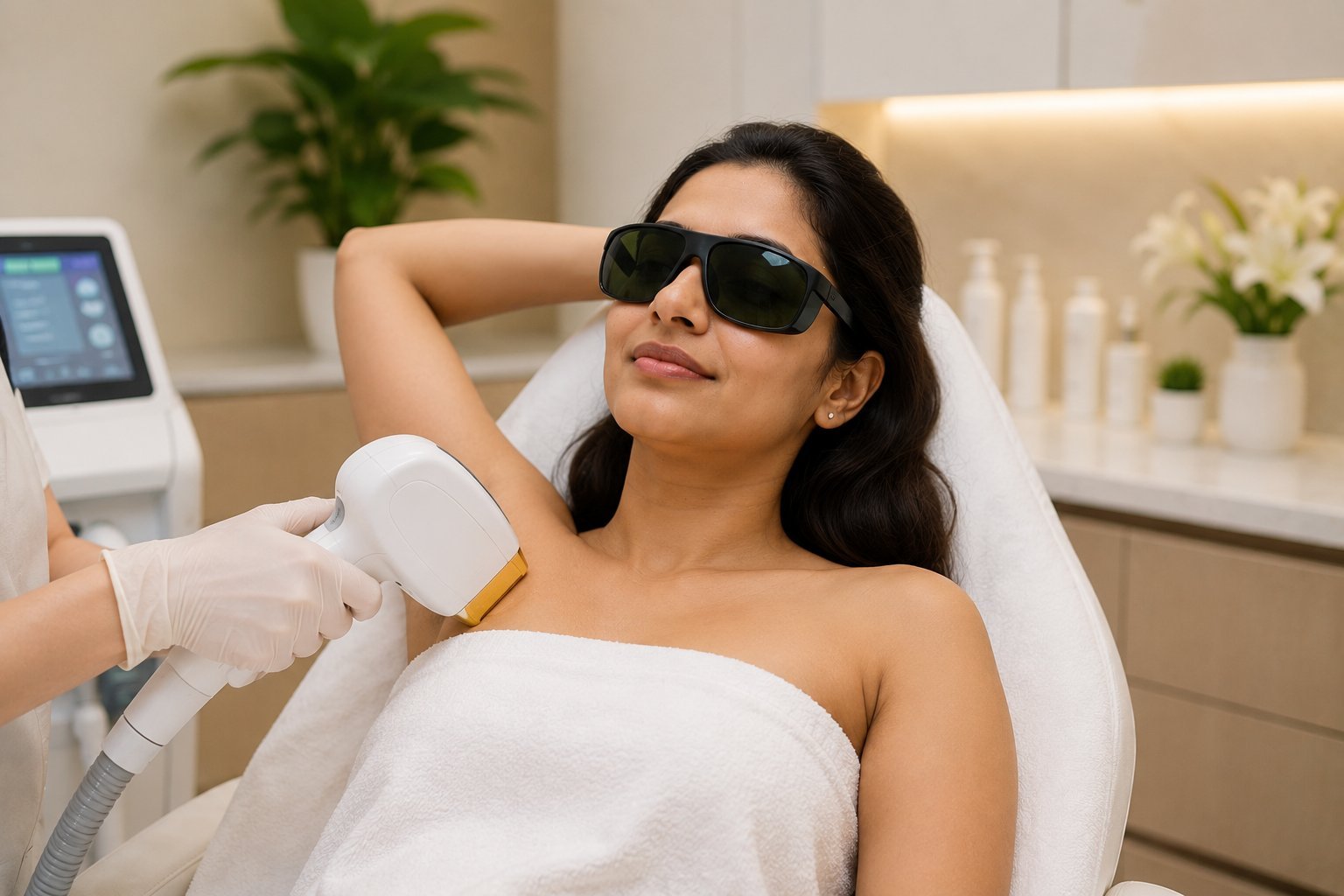
3. Q-switched laser toning
For stubborn melasma, low-energy laser toning calibrated for dusky skin breaks pigment down gradually. The keyword is calibrated — wrong settings can darken melasma on Indian skin, which is why dermatologist supervision matters.
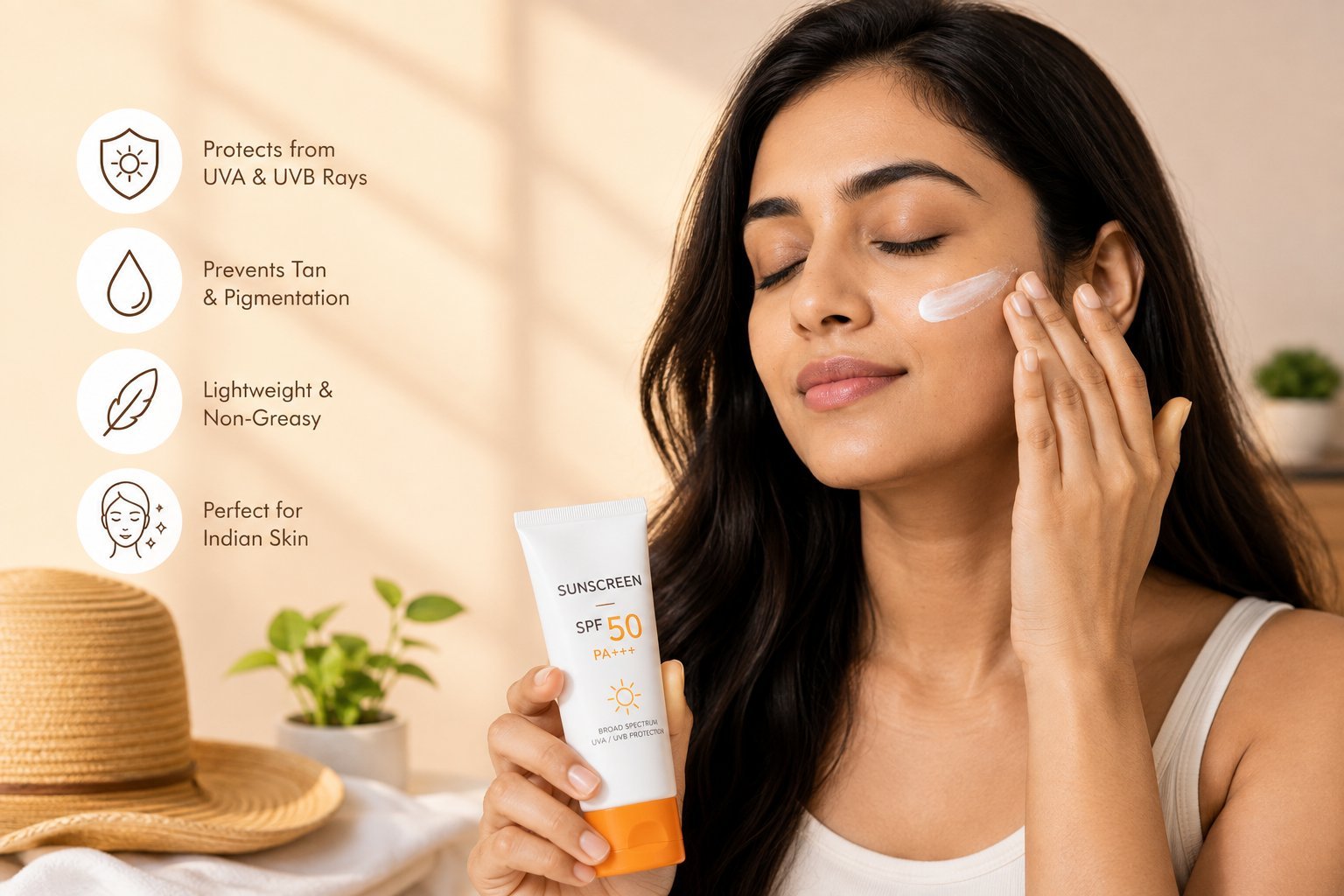
4. Sunscreen, without exceptions
No melasma plan survives without daily broad-spectrum SPF. Read our sunscreen guide for Indian skin.
The honest truth
- Melasma is controlled, not cured — anyone promising permanent removal is overselling.
- With the right protocol, dramatic fading and long-term control are absolutely achievable.
- Maintenance (sunscreen + periodic treatment) keeps it away.
When to see a dermatologist
If a patch has persisted more than a few months, is spreading, or has not responded to basic care — book a consultation. Early, correct treatment is faster and cheaper than years of trial-and-error creams.

Dr. Dhwani Shah (Vakta)
MBBS, DDVL · Consultant Dermatologist & Aesthetic Physician, Derma Wellness & Aesthetic Clinic, Ahmedabad · 20+ years of experience
This article is for general information only and is not a substitute for a medical consultation. Treatment suitability, sessions and results vary from person to person. Book a consultation for advice specific to your skin.