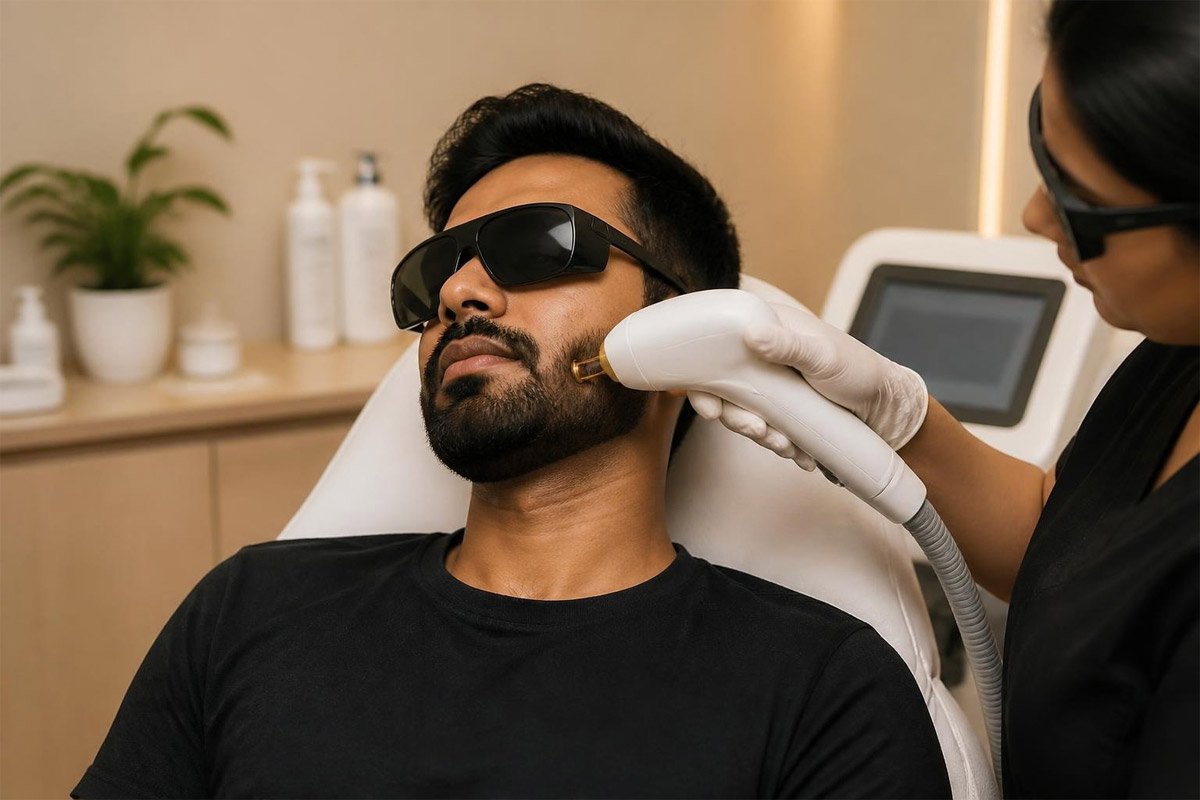
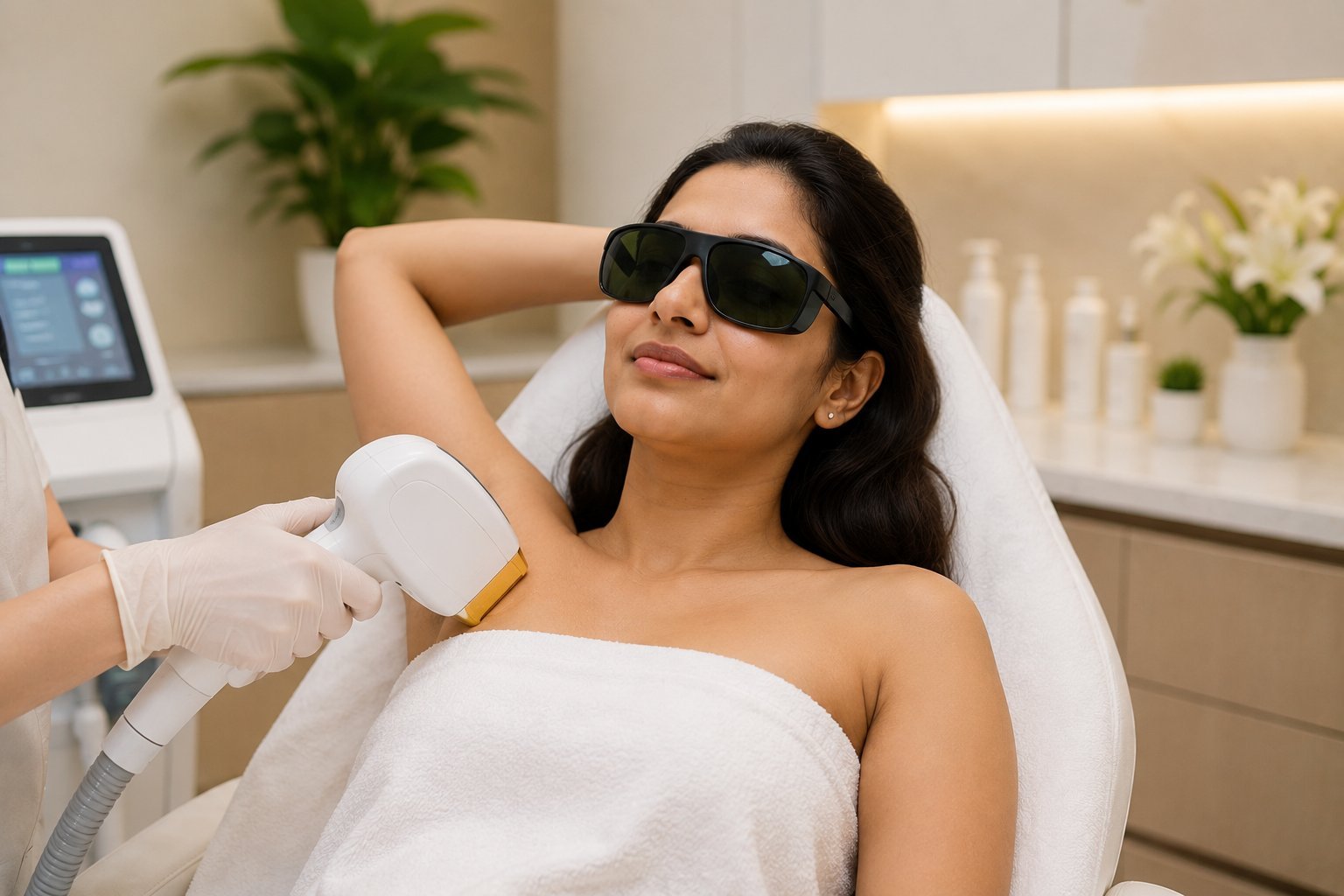
A decade ago, the caution was justified: early lasers struggled to tell dark hair from dark skin, and burns on dusky skin were a real risk. The technology has changed. Here is what melanin-rich skin needs to know in 2026.
Why dusky skin needed special care
Lasers target melanin — the pigment in the hair root. But skin melanin can absorb that same energy. On deeper Indian skin tones, the wrong wavelength or settings can heat the skin itself, causing burns or dark patches. The fix is not avoiding laser; it is using the right laser, correctly.
What makes laser safe on Indian skin today
- Longer wavelengths that bypass surface pigment and reach the follicle deeper down — the standard of care for darker skin types.
- Built-in cooling that protects the skin surface during each pulse.
- Conservative, personalised settings — adjusted to your exact tone, not a generic preset.
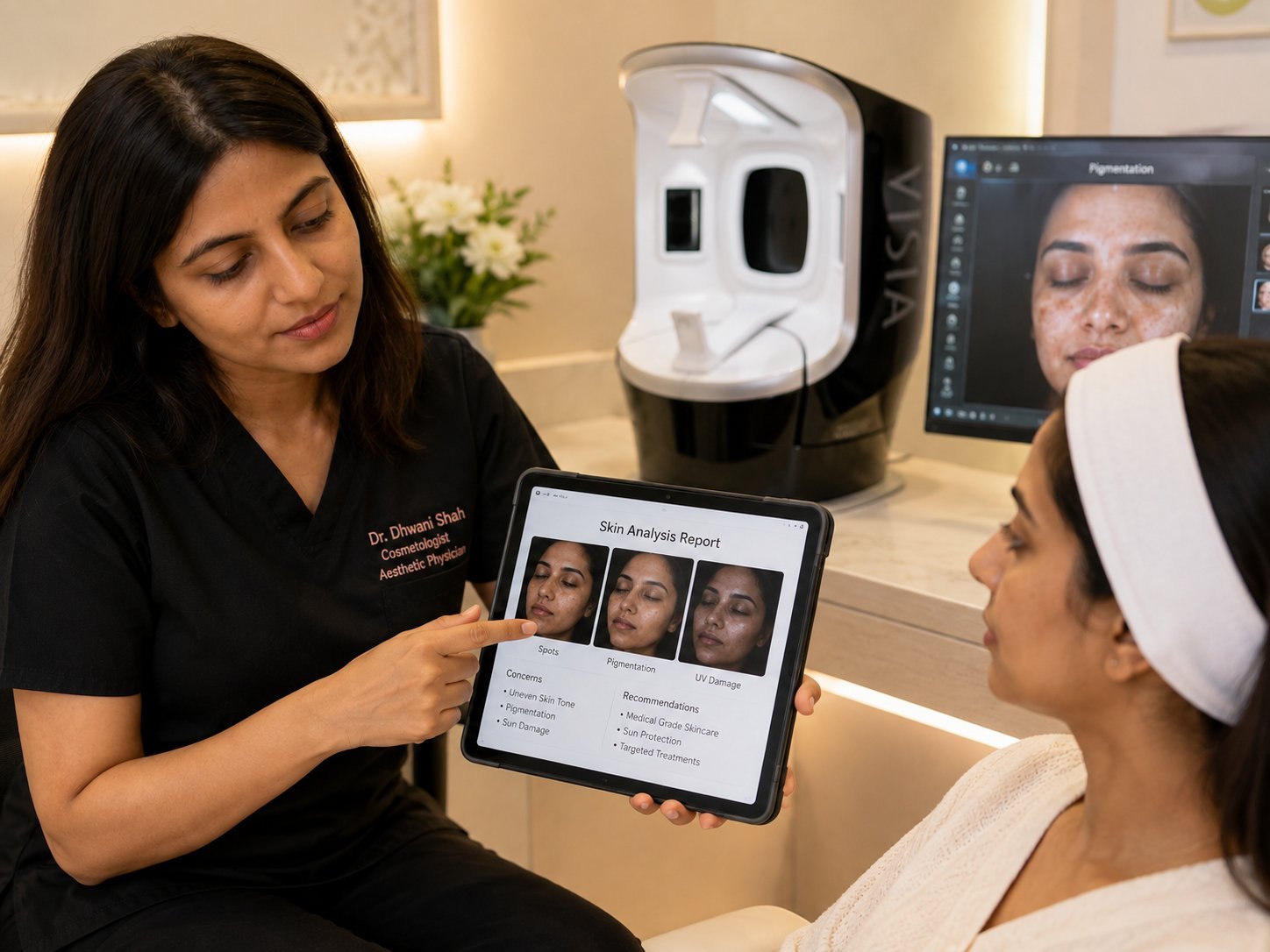
- A patch test first — a small trial area, reviewed before your course begins. Non-negotiable at our clinic.
Questions to ask before booking anywhere
- Which laser platform do you use, and is it suited to darker skin types?
- Who sets the parameters — a dermatologist or a technician alone?
- Do you patch test before starting?
- Is a doctor available on site if skin reacts?
Red flags to avoid
Heavily discounted "unlimited sessions" packages, salons where no physician is involved, and anyone who skips the patch test. Complications on dark skin are avoidable — nearly every case we correct started at an unsupervised setup.
The bottom line
With modern platforms and dermatologist supervision, laser hair removal is safe and highly effective from fair to deeply dusky Indian skin — for women and men alike. Every course at our Ahmedabad laser clinic begins with a skin-type assessment and complimentary patch test.

Dr. Dhwani Shah (Vakta)
MBBS, DDVL · Consultant Dermatologist & Aesthetic Physician, Derma Wellness & Aesthetic Clinic, Ahmedabad · 20+ years of experience
This article is for general information only and is not a substitute for a medical consultation. Treatment suitability, sessions and results vary from person to person. Book a consultation for advice specific to your skin.